

Introduction
Sunlight is often taken for granted in modern life. Most people spend the majority of their day indoors, under artificial lighting, avoiding direct exposure due to skin concerns or busy schedules. Yet sunlight has been a core driver of human health, agriculture, environmental balance, and even cultural evolution for millennia.
Modern research reveals that sunlight influences not just vitamin D production, but also circadian rhythms, mental health, immunity, metabolism, and agricultural productivity. Moreover, in many developing countries, sunlight serves as a natural environmental protector, disinfecting open waste systems and supporting life in areas affected by pollution.
From the earliest civilizations to modern green energy technology, sunlight remains a life-sustaining force. This article explores its clinical, environmental, agricultural, historical, and cosmic significance, emphasizing the benefits often forgotten in the digital age.

1. Humans Are Designed for Sunlight
Throughout evolution, humans evolved under consistent exposure to sunlight. Our physiology relies on natural light cycles to regulate hormones, sleep patterns, and physical activity. Sunlight is the primary synchronizer of circadian rhythm, influencing melatonin release, sleep quality, and metabolic efficiency (Czeisler et al., 2019).
Modern indoor lifestyles and artificial lighting have drastically reduced sunlight exposure, contributing to widespread vitamin D deficiency, sleep disturbances, mood disorders, and weakened immunity (Lucas et al., 2014). Humans are biologically programmed to thrive with sunlight—our health is intertwined with it at a fundamental level.
2. ☀️ Sunlight — nature’s most powerful source of vitamin D and your body’s silent daily protector.
Sunlight enables endogenous vitamin D synthesis via UVB rays interacting with skin. Vitamin D regulates:
- Calcium and phosphate metabolism for bone strength
- Immune system function
- Inflammatory signaling and cell growth (Holick, 2007)
Unlike supplements, natural sunlight produces additional photoproducts in the skin that may contribute to broader health effects (Slominski et al., 2015). Morning sunlight of 10–20 minutes on arms and face is often sufficient for vitamin D production without overexposure.

Sunlight is nature’s most powerful medicine and energy source—boosting health, sustaining life, and powering our planet with clean, green energy.
3. Circadian Rhythm and Hormonal Regulation
Sunlight regulates the suprachiasmatic nucleus in the hypothalamus, controlling melatonin secretion and synchronizing the body clock. Proper exposure:
- Improves sleep quality and duration
- Supports hormonal balance
- Enhances metabolic efficiency and insulin sensitivity (Czeisler et al., 2019)
Disruption of these rhythms increases risk of metabolic disorders, depression, and cardiovascular issues.
Internal Link: Connect this to Why Natural Hunger Is Better Than Scheduled Eating to emphasize natural rhythms.
4. Mental Health Benefits
Sunlight boosts serotonin, improving mood, stress resilience, and cognitive performance. Clinical studies link reduced sunlight exposure to:
- Seasonal affective disorder (SAD)
- Anxiety and depression (Lambert et al., 2002; Golden et al., 2005)
Regular exposure, even without supplements, improves mental well-being, demonstrating that sunlight has direct neuropsychological effects independent of vitamin D.
5. Immune System and Anti-Inflammatory Effects
Vitamin D produced via sunlight regulates innate and adaptive immunity by modulating T-cells and macrophage activity. UV exposure also has direct anti-inflammatory effects, reducing autoimmune overactivity (Aranow, 2011; Norval et al., 2011).
Populations with limited sunlight exposure may have higher susceptibility to infections and chronic inflammation, emphasizing sunlight’s role as a natural immune regulator.
6. Metabolic and Cardiovascular Implications
Sunlight influences metabolic and cardiovascular health through:
- UV-induced nitric oxide release, lowering blood pressure (Weller, 2016)
- Improved insulin sensitivity
- Enhanced energy balance and metabolic efficiency
Internal Link: Connect to A Unique Article About Diabetes for metabolic discussions.
7. Sunlight as an Environmental Regulator in Developing Regions
In many third-world countries, environmental sanitation remains a challenge:
- Open sewage canals and trash systems
- Industrial effluents and air pollution
- Vehicle-generated smog and dust
Sunlight’s UV radiation naturally reduces microbial load on exposed surfaces, water, and waste, acting as a passive disinfectant. While not a replacement for proper sanitation, sunlight mitigates pathogen risks where infrastructure is limited.
Sunlight also interacts with air pollutants, driving photochemical processes that reduce environmental contamination and support ecological balance. Its role in environmental regulation is critical, particularly where urban crowding, pollution, and waste management pose challenges.

Sunlight respects the third world culture of life—acting as nature’s protection, cleansing the environment, and sustaining communities.
8. Sunlight as the Foundation of Agriculture and Food Security
Sunlight drives photosynthesis, enabling plants to convert solar energy into chemical energy. This energy supports:
- Crop growth and nutritional quality
- Livestock health via sun-exposed forage
- Human nutrition through food chains
Healthy sunlight exposure ensures agricultural productivity and food security, especially in regions dependent on farming. Disruptions to sunlight availability—due to pollution, climate change, or environmental degradation—can reduce crop yields, compromise livestock health, and affect human nutrition.

Colorful Earth planet template showing vibrant farm, forest, and field landscapes, with the Sun and Mars in space. This illustration highlights the Sun as the primary source of life, energy, and green electricity for Earth.
9. Sunlight and Animal Life: A Critical Factor in Cattle Farming and Biological Health
Sunlight plays a fundamental and often underestimated role in animal life, particularly in cattle farming and livestock production systems. Just as humans depend on sunlight for vitamin synthesis, circadian rhythm regulation, and immune support, animals rely on solar exposure to maintain physiological balance, growth, reproduction, and disease resistance. In natural ecosystems and traditional farming environments, sunlight has shaped animal biology for millions of years, influencing behavior, metabolism, and survival patterns.
One of the most scientifically recognized benefits of sunlight for animals is the synthesis of vitamin D, which is essential for calcium absorption, bone development, and skeletal strength. In cattle and other livestock, adequate sunlight exposure prevents metabolic disorders such as rickets in young animals and osteomalacia in adults. Vitamin D deficiency in animals leads to weak bones, reduced milk production, impaired growth, and higher susceptibility to fractures. Natural sunlight remains the most efficient and biologically adapted source of vitamin D for grazing animals, surpassing artificial supplementation in physiological effectiveness.
Sunlight also plays a crucial role in regulating circadian rhythms and hormonal cycles in animals. Livestock exposed to natural light patterns exhibit healthier feeding behavior, improved digestion, and stable reproductive cycles. Photoperiod—the length of daylight—affects hormonal secretion such as melatonin, prolactin, and cortisol, which in turn influence milk yield, fertility, and stress levels. For example, dairy cattle exposed to proper daylight cycles show increased milk production and better overall welfare compared to animals kept in constant artificial lighting or confined dark environments.
From an immunological perspective, sunlight contributes indirectly to stronger immune systems in animals. Sunlit environments reduce the survival of pathogens, bacteria, and parasites in soil, water, and animal housing areas. Ultraviolet (UV) radiation has natural antimicrobial properties that limit the spread of infectious diseases, particularly in open grazing systems. In third-world and rural farming systems, sunlight acts as a natural disinfectant for animal shelters, open pastures, and manure areas, reducing disease burden without chemical disinfectants.
Sunlight also influences animal behavior and psychological well-being. Animals evolved in open environments under the Sun, and access to daylight reduces stress, aggression, and abnormal behaviors in livestock. Studies in animal welfare science show that cattle, poultry, and other farm animals exposed to natural light display more natural grazing, resting, and social behaviors, leading to better productivity and ethical farming standards. Sunlight exposure improves appetite, mobility, and reproductive activity, all of which are essential for sustainable animal agriculture.
☀️ SUNLIGHT (Solar Energy)
↓
🌱 PHOTOSYNTHESIS IN PLANTS
↓
🌾 GRASS, CROPS, AND FODDER
↓
🐄 CATTLE AND LIVESTOCK
↓
🥛 MILK, 🥩 MEAT, 🥚 ANIMAL PRODUCTS
↓
👨👩👧 HUMANS
(Nutrition, Health, Survival)In terms of agricultural productivity, sunlight directly affects the quality and quantity of animal feed. Grass, crops, and fodder plants rely on sunlight for photosynthesis, which forms the primary energy base for herbivorous animals. Healthy sunlight-driven pastures produce nutrient-rich forage, which improves animal growth rates, milk quality, and meat composition. Therefore, sunlight indirectly determines the nutritional value of animal products consumed by humans.
Sunlight also plays a role in thermal regulation and environmental adaptation. Animals use sunlight for body temperature regulation, especially in early morning and cold climates. Proper sunlight exposure supports metabolic efficiency, reduces cold stress, and improves survival rates in young animals. Conversely, understanding solar heat exposure also helps farmers design shelters and shade systems to prevent heat stress, showing that sunlight management is a critical component of modern livestock engineering.
In the context of sustainable farming and environmental protection, sunlight supports low-input, eco-friendly livestock systems. Grazing animals under natural sunlight require fewer artificial supplements, antibiotics, and chemical disinfectants. This reduces environmental pollution from veterinary drugs, fertilizers, and industrial feed production. Sunlight-driven pastoral systems represent a natural alignment between animal biology and Earth’s ecological cycles.
In conclusion, sunlight is not merely a source of illumination for animals; it is a biological regulator, immune supporter, agricultural foundation, and welfare enhancer. From vitamin synthesis and hormonal balance to disease control and pasture productivity, sunlight remains one of the most essential natural resources for cattle farming and animal life. Recognizing the role of sunlight in animal health strengthens the understanding that the Sun is a central force sustaining not only human civilization but also the entire agricultural and biological system on Earth.

In Summary Sunlight is essential for animal health, livestock productivity, and sustainable agriculture. Animals depend on sunlight for vitamin D synthesis, strong bones, hormonal balance, and immune system regulation. Natural daylight also improves animal behavior, fertility, and milk production by regulating circadian rhythms and biological cycles. In farming environments, sunlight acts as a natural disinfectant, reducing pathogens in pastures, shelters, and manure areas, especially in third-world rural systems. Sunlight-driven photosynthesis produces grass and crops, forming the base of the food chain for cattle and humans. Without sunlight, modern agriculture and animal-based food systems would collapse. Understanding sunlight’s role in animal life reveals its importance not only for human health but also for global food security and environmental sustainability.
References
- National Research Council (NRC). Nutrient Requirements of Dairy Cattle. National Academies Press.
- Food and Agriculture Organization of the United Nations (FAO). Livestock and Environmental Sustainability Reports.
- World Health Organization (WHO). Sunlight, Vitamin D, and Health Guidance.
- United States Department of Agriculture (USDA). Animal Husbandry and Environmental Factors.
- International Journal of Animal Welfare Science – General daylight and livestock behavior research summaries.
- Environmental Protection Agency (EPA). Ultraviolet Radiation and Environmental Pathogen Reduction.
- Agricultural Systems and Sustainability Reports by FAO and UNEP.
10. Historical and Cultural Perspective
Early civilizations revered the sun, sometimes even praying to it, acknowledging its essential role in life, agriculture, and survival. While historically perceived as a deity, sunlight is scientifically a blessing of God, a life-giving natural resource rather than an object of worship.
Ancient humans instinctively recognized sunlight’s benefits, while modern science reveals mechanisms behind its health, environmental, and agricultural impacts. Understanding sunlight as a divine gift aligns spiritual insight with scientific knowledge.

In early human history, many cultures worshiped the sun for survival, but today science reveals the sun as a divine blessing—powering life, health, and nature, not a god itself.
11. Greenhouse Gases, the Sun, and the Earth: A Delicate Energy Balance
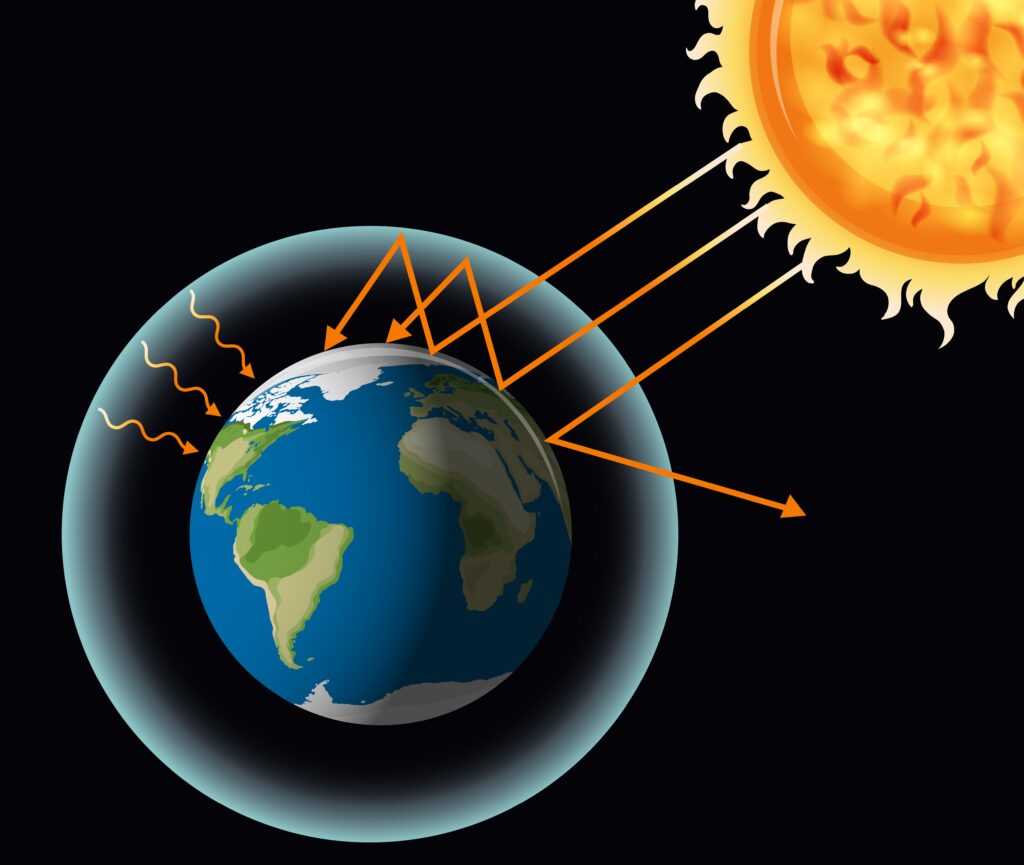
The Earth’s climate system is fundamentally governed by the interaction between solar radiation from the Sun and the concentration of greenhouse gases in the atmosphere. The Sun is the primary energy source for the Earth, delivering shortwave radiation that penetrates the atmosphere and warms the planet’s surface. Once absorbed by land, oceans, and vegetation, this energy is re-emitted as longwave infrared radiation. Greenhouse gases—including carbon dioxide (CO₂), methane (CH₄), nitrous oxide (N₂O), and water vapor—play a crucial role by absorbing and re-radiating a portion of this outgoing heat back toward the Earth’s surface. This natural process, known as the greenhouse effect, is essential for maintaining temperatures that allow liquid water, ecosystems, and life to exist. Without it, Earth’s average surface temperature would be approximately −18°C instead of the current ~15°C, rendering the planet largely uninhabitable.
However, while the greenhouse effect itself is a natural and necessary phenomenon, the problem arises when greenhouse gas concentrations exceed natural equilibrium levels. Human activities such as fossil fuel combustion, industrial emissions, deforestation, and intensive agriculture have significantly increased atmospheric greenhouse gases over the past two centuries. This enhancement alters the Earth’s energy balance by trapping more solar-derived heat than the climate system can naturally dissipate. As a result, solar energy that once flowed efficiently through the Earth–atmosphere system becomes increasingly retained, leading to global temperature rise, altered precipitation patterns, and climate instability.
The Sun’s role in this process is often misunderstood. Solar output varies slightly over time due to solar cycles, sunspots, and magnetic activity, but extensive scientific evidence shows that recent global warming trends cannot be explained by changes in solar intensity alone. Instead, it is the interaction between relatively stable solar radiation and elevated greenhouse gas concentrations that amplifies warming. In essence, the Sun continues to provide energy at roughly consistent levels, but Earth’s atmosphere has become more efficient at trapping that energy due to increased greenhouse gases.
This imbalance has profound consequences. Excess heat retained in the atmosphere leads to ocean warming, which disrupts marine ecosystems and accelerates sea-level rise through thermal expansion. On land, increased surface temperatures intensify heatwaves, droughts, and wildfires, while altered solar-energy distribution affects cloud formation, monsoon systems, and agricultural productivity. Importantly, greenhouse gases also influence how solar radiation is absorbed and scattered, affecting Earth’s albedo—the proportion of sunlight reflected back into space. Loss of reflective surfaces such as ice and snow further increases solar absorption, creating a positive feedback loop that intensifies warming.
Yet sunlight itself is not the problem; rather, it is the mismanagement of Earth’s atmospheric composition. Solar energy remains a clean, renewable input to the Earth system. In fact, harnessing solar radiation through renewable technologies offers one of the most effective solutions to reducing greenhouse gas emissions. By replacing fossil fuel–based energy with solar power, humanity can realign with the natural solar–Earth balance that sustained life for thousands of years. This approach reduces atmospheric carbon accumulation while continuing to benefit from the Sun’s abundant energy.
From a planetary perspective, Earth’s climate stability depends on a finely tuned relationship between the Sun’s energy output and atmospheric regulation. Greenhouse gases act as a thermal blanket—essential when balanced, destructive when excessive. Understanding this relationship highlights a crucial truth: the Sun provides life-supporting energy, but human actions determine whether that energy sustains or destabilizes the planet. Protecting this balance is not only a scientific necessity but a responsibility toward future generations and the natural systems that depend on Earth’s climate equilibrium.
12. Solar System Renewable Energy: Engineering Clean Electricity While Saving Earth from Pollution
Solar system renewable energy is one of the most effective technologies for protecting Earth from pollution while meeting growing electricity demands. The Sun continuously produces energy through nuclear fusion, releasing electromagnetic radiation that reaches Earth as sunlight. This solar energy arrives without smoke, waste, or chemical byproducts. When converted into electricity through engineered solar systems, it provides power without introducing new pollutants into the atmosphere, soil, or water—unlike crude oil–based energy systems that generate pollution at every stage of their lifecycle.
From an electrical engineering perspective, solar energy conversion relies on the photovoltaic (PV) effect. Solar panels are composed of high-purity crystalline silicon cells engineered with p-type and n-type semiconductor layers. When sunlight strikes the surface of these cells, photons transfer energy to electrons, allowing them to move freely across the p–n junction and generate direct current (DC). This process occurs silently, without combustion, vibration, or emissions. Inverters then convert DC electricity into alternating current (AC) suitable for homes, industries, and power grids, maintaining electrical stability and efficiency through advanced control circuits and maximum power point tracking (MPPT) systems.
The pollution-saving impact of solar energy begins with zero operational emissions. Crude oil–powered electricity plants emit large quantities of carbon dioxide, sulfur dioxide, nitrogen oxides, and particulate matter. These pollutants contribute directly to air pollution, acid rain, smog formation, and respiratory diseases. Solar systems eliminate these emissions entirely during electricity generation. As a result, widespread adoption of solar energy significantly improves air quality, particularly in urban and third-world regions where pollution levels are already high due to traffic, industrial activity, and open waste systems.
Solar energy also protects Earth by reducing greenhouse gas accumulation, which disrupts the planet’s natural energy balance. While sunlight itself is neutral and life-supporting, excessive greenhouse gases trap solar heat, leading to global warming and climate instability. By replacing crude oil–based electricity with solar power, atmospheric carbon emissions are reduced, allowing Earth’s natural greenhouse effect to return closer to equilibrium. This helps stabilize temperatures, protect glaciers, reduce extreme weather events, and preserve ecosystems.
Beyond the atmosphere, solar energy prevents land and water pollution associated with crude oil extraction and refining. Oil drilling contaminates soil, damages forests, and threatens wildlife habitats. Refining crude oil releases toxic effluents and requires large volumes of water, often polluting rivers and groundwater. Oil transportation carries constant risks of spills that devastate marine and coastal ecosystems. Solar systems avoid these hazards entirely, as they require no fuel mining, no transportation, and no chemical processing during operation.
From a systems-engineering standpoint, solar power enables localized and decentralized electricity generation, reducing the environmental burden of large centralized power plants. Rooftop and community solar systems generate electricity near the point of consumption, minimizing transmission losses and reducing the need for additional fossil-fuel power stations. When combined with energy storage technologies such as lithium-ion batteries, solar systems ensure reliable power while lowering dependence on diesel generators—another major source of pollution in developing regions.
Solar energy also contributes to long-term Earth conservation by aligning electricity production with natural cycles. The Sun powers photosynthesis, water evaporation, climate regulation, and agricultural productivity. Solar technology simply converts a fraction of this existing energy flow into electricity without disrupting these processes. This integration ensures that human energy consumption does not exceed Earth’s ecological limits.
In conclusion, solar system renewable energy is not only an engineering solution but a planetary protection mechanism. By generating electricity without air, water, or soil pollution, solar systems actively save Earth from the environmental damage caused by crude oil and fossil fuels. Embracing solar energy means preserving clean air, protecting ecosystems, stabilizing climate systems, and ensuring a healthier planet for future generations—while still meeting modern electrical demands through scientifically sound and technologically advanced systems.

Solar panels convert sunlight directly into clean electricity, powering homes without smoke, fuel, or pollution—proving renewable energy is the future of sustainable living.
13. How to Get Safe Sunlight Daily
- Morning sunlight: 10–20 minutes on arms and face
- Avoid peak UV hours (11 a.m.–3 p.m.) for prolonged exposure
- Moderate outdoor activity for circadian and mental health
- Use protective clothing or shade when necessary
Conclusion
Sunlight is far more than warmth or vitamin D. It is a clinical, environmental, agricultural, historical, and cosmic force:
- Clinically, it supports vitamin D, immunity, metabolism, mental health, and circadian rhythms
- Environmentally, it disinfects and maintains balance in polluted or unsanitary areas
- Agriculturally, it sustains plants, livestock, and human nutrition
- Historically and culturally, it shaped early human reverence
- Cosmically, it represents safe, green energy and the Sun’s nuclear powerhouse
By integrating sunlight responsibly into daily life, humans reconnect with natural rhythms, environmental balance, and the broader solar system, honoring a blessing that has sustained life since the dawn of civilization.
References (APA-Style)
- Aranow, C. (2011). Vitamin D and the immune system. Journal of Investigative Medicine, 59(6), 881–886.
- Czeisler, C. A., et al. (2019). Circadian rhythms and human health. New England Journal of Medicine, 380, 115–127.
- Golden, R. N., et al. (2005). The efficacy of light therapy in the treatment of mood disorders. American Journal of Psychiatry, 162(4), 656–662.
- Holick, M. F. (2007). Vitamin D deficiency. New England Journal of Medicine, 357(3), 266–281.
- Lambert, G. W., et al. (2002). Effect of sunlight on serotonin turnover in the brain. The Lancet, 360(9348), 1840–1842.
- Lucas, R. M., et al. (2014). Sun exposure and health: balancing risks and benefits. International Journal of Environmental Research and Public Health, 11(5), 4476–4499.
- Norval, M., et al. (2011). The effects of UV radiation on the immune system. Photochemical & Photobiological Sciences, 10(6), 956–966.
- Slominski, A. T., et al. (2015). Novel activities of vitamin D metabolites. Endocrinology, 156(1), 1–11.
- Weller, R. B. (2016). Sunlight has cardiovascular benefits independently of vitamin D. Journal of Investigative Dermatology, 136(1), 21–27.