

Before the Scientific theory we are defining a logic chart to understanding a easy and smart way:
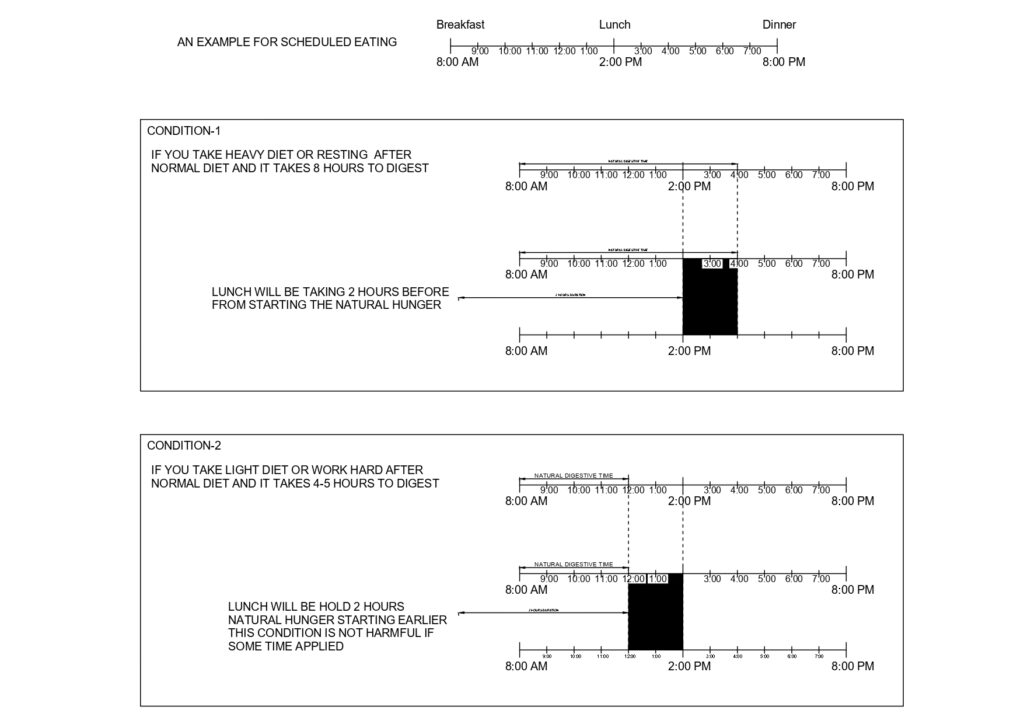
This chart explains the difference between scheduled eating (fixed meal times) and the body’s natural hunger-based digestive system. The human body regulates hunger through a complex physiological process designed to maintain energy balance, digestion efficiency, and metabolic stability. This process does not operate on a strict clock.
In scheduled eating, meals are consumed at predetermined times (for example, breakfast at 8:00 AM, lunch at 2:00 PM, and dinner at 8:00 PM), regardless of whether the previous meal has been fully digested or whether natural hunger signals are present. The chart demonstrates how this approach can conflict with the body’s natural digestive timing.
The digestive system responds dynamically to meal size, food composition, physical activity, and individual metabolism. After eating, digestion and nutrient absorption continue for several hours. When a meal is heavy or followed by physical rest, digestion may take up to eight hours. In such cases, eating again according to schedule may occur before natural hunger begins, causing overlapping digestive processes and suppressing normal hunger signaling.
In contrast, when a meal is lighter or followed by increased physical activity, digestion may complete in four to five hours. Under these conditions, natural hunger signals may appear earlier than the scheduled meal time. This can result in delayed eating, where the body experiences hunger but food intake is postponed until the clock allows it.
The chart highlights that both situations—eating too early or eating too late—represent a misalignment between eating time and physiological readiness. While occasional mismatches are generally not harmful, repeatedly ignoring natural hunger cues may interfere with the gut–brain communication system that regulates appetite, digestion, and energy balance.
Overall, this model emphasizes that the human digestive system is adaptive and variable, not fixed to clock time. Eating in response to natural hunger allows food intake to align with digestion completion, hormonal signaling, and metabolic demand, supporting better digestive comfort and long-term appetite regulation.
Understanding the Hunger System in the Human Body
The hunger system in the human body is a complex and highly regulated process designed to maintain energy balance—keeping weight and energy levels stable. It works through a continuous communication loop called the gut-brain axis, which involves hormonal, neural, and metabolic signals.
This system is naturally tuned to guide when and how much we eat. Following strict scheduled eating can disrupt this carefully balanced process, interfering with digestion, metabolism, and overall energy regulation. By eating according to natural hunger, we allow our body to function as it was designed, promoting better health and energy management.
Key Components of the Hunger System
- Brain (Hypothalamus): The central command center that processes signals regarding energy needs. It contains “hunger neurons” (NPY/AgRP) that activate when energy is low, and “satiety neurons” (POMC/CART) that stop hunger.
- Stomach and Gut: The primary source of short-term hunger signals (ghrelin) and satiety signals (CCK, PYY) based on whether the stomach is empty or full.
- Fat Cells (Adipose Tissue): Release leptin, a hormone that communicates long-term energy stores to the brain to suppress appetite.
- Pancreas/Liver: Release insulin and monitor blood glucose levels, which drop during hunger and rise after eating.
How Hunger Functions (The Cycle)
- Initiation (Hunger Cues): When the stomach is empty, it produces the hormone ghrelin. Simultaneously, blood sugar (glucose) levels drop, and the brain receives signals that energy is low. The hypothalamus activates NPY/AgRP neurons, causing hunger pangs and motivation to eat.
- Eating (Feeding Behavior): The body consumes food, which is detected by pressure-sensitive mechanoreceptors in the stomach (distension) and nutrient receptors in the gut.
- Satiation (Stopping Eating): As food passes through the gastrointestinal tract, the gut releases satiety peptides like cholecystokinin (CCK) and PYY, which signal the brain to stop eating.
- Satiety (Fullness): Once food is digested, blood sugar increases, and insulin is released. Long-term, fat cells produce leptin, which signals the brain to reduce appetite until energy levels drop again.
Key Factors Influencing Hunger
- Hedonic Hunger: Beyond basic needs, the brain’s reward system (dopamine) can override homeostatic hunger, driving a desire for food based on pleasure, such as high-fat or sugary items.
- The Migrating Motor Complex (MMC): About two hours after eating, the stomach initiates “housekeeping” contractions (the MMC) to clear debris, which can be heard as a “growling” stomach and are associated with hunger sensations.
- Stress and Emotions: Stress increases cortisol, which can create hunger cues.
- Sleep and Health: Lack of sleep increases ghrelin (hunger hormone), while illness can suppress hunger through the release of cytokines.
Common Dysregulations
- Leptin Resistance: Obese individuals may have high levels of leptin, but the brain becomes desensitized, failing to receive the “full” signal.
- Processed Foods: High-fat, high-sugar foods can override homeostatic signals and rewire the brain to crave more, leading to overeating.
Modern diets teach people to eat by the clock, not by the body. Yet natural hunger signals are one of the most intelligent systems humans possess.
When we eat only when genuinely hungry, digestion improves, insulin levels remain stable, and unnecessary weight gain reduces naturally. Scheduled eating often leads to overeating, bloating, and fatigue.
Listening to hunger reconnects us with our body’s wisdom. Natural hunger appears gradually, while emotional hunger arrives suddenly. Learning the difference can transform health without extreme diets.
Nature never eats by schedule — and humans were never designed to either.