


Easy meals today, chronic health problems tomorrow—fast food silently sneaks into our routine.
In today’s fast-paced world, convenience often dictates our food choices. Busy schedules, long working hours, and the ease of ordering ready-to-eat meals make fast food a default option for many families. While it saves time, this habit silently replaces home-cooked, nutrient-rich meals with calorie-dense, heavily processed foods. Over time, reliance on quick meals contributes to obesity, diabetes, heart disease, and other chronic health issues. The simplicity of grabbing fast food today comes at the cost of long-term health, proving that easiness in our routine life can unintentionally pave the way for processed food dependence. Choosing real, home-cooked meals, even in small steps, can break this cycle and protect both our body and mind from the hidden harms of convenience-driven eating.

Sneaky fast-food habits in children: while parents cook healthy meals, processed foods silently become part of daily routine.
This scene reflects a common modern reality in many families. While parents try to prepare healthy, home-cooked meals rich in vegetables and nutrients, children often secretly consume processed foods like French fries, burgers, and sugary snacks. The child hiding behind the door symbolizes how junk food has become an attractive but hidden habit in daily life. Processed foods are designed to be tasty, addictive, and convenient, making them more appealing than natural meals. However, this convenience comes with long-term health risks such as obesity, diabetes, digestive problems, and weakened immunity. The contrast between the mother cooking fresh vegetables and the child secretly eating fries highlights the growing gap between healthy intentions and real-life eating behaviors. This hidden lifestyle shift is one of the major reasons modern diseases are rising silently in both children and adults.
The Clinical Observation
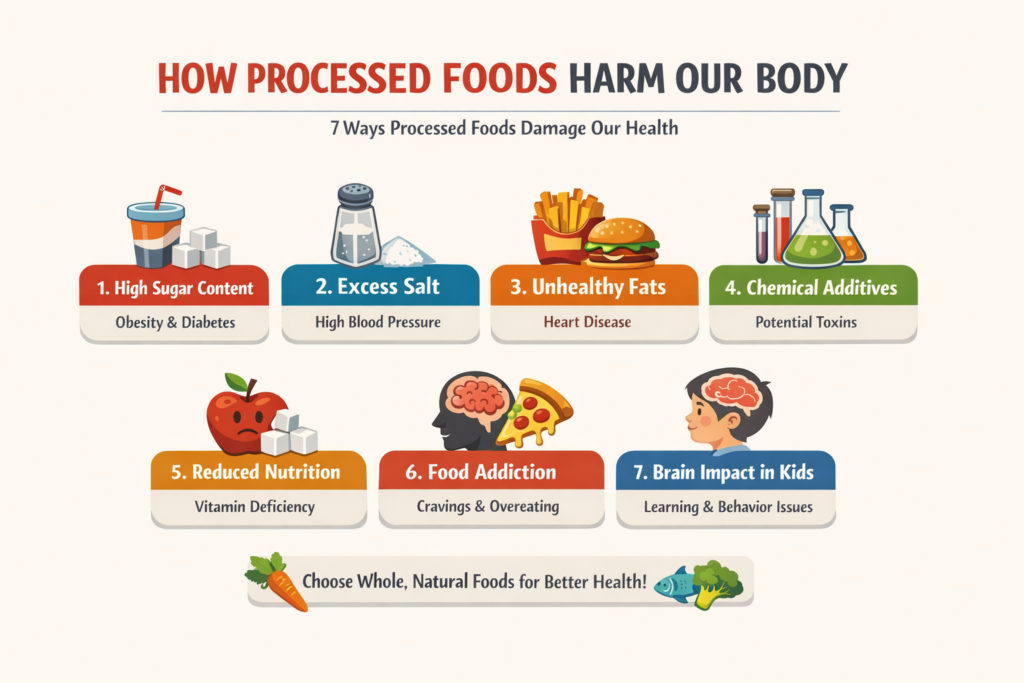
Processed and fast foods have become an everyday part of modern diets due to convenience and taste. However, while they satisfy cravings quickly, they silently damage our body and overall health. From high sugar levels to chemical additives, these foods affect metabolic, cardiovascular, digestive, and even mental health. Understanding their clinical effects is essential to make healthier choices.
1. High Sugar Content
Processed foods are often loaded with hidden sugars, even in items that don’t taste sweet, such as bread, sauces, and packaged snacks. Excess sugar causes rapid blood glucose spikes, forcing the pancreas to release large amounts of insulin. Over time, this can lead to insulin resistance, type 2 diabetes, and obesity. Chronic sugar intake also promotes systemic inflammation, fatty liver disease, and heart problems. In children, high sugar consumption contributes to hyperactivity, poor concentration, and early onset obesity.
Clinical Tip: Replace sugary processed foods with natural fruits, whole grains, and fiber-rich diets to stabilize blood sugar and prevent chronic diseases.
2. Excess Salt
Processed foods contain dangerously high levels of sodium to enhance flavor and preserve shelf life. Excess salt leads to water retention, high blood pressure, arterial stiffness, heart disease, stroke, and kidney damage. Children and sensitive individuals may also experience bloating, headaches, and fluid retention.
Clinical Tip: Limit salt intake to less than 5 grams per day (WHO recommendation) and choose fresh, home-cooked meals to protect heart and kidney health.
3. Unhealthy Fats
Fast foods and packaged snacks are loaded with trans fats and saturated fats, which raise bad cholesterol (LDL) and reduce good cholesterol (HDL). Clinically, this leads to atherosclerosis, heart attacks, strokes, obesity, fatty liver disease, and insulin resistance.
Clinical Tip: Replace unhealthy fats with healthy fats like olive oil, nuts, seeds, avocados, and fatty fish for better heart and metabolic health.
4. Chemical Additives
Processed foods contain preservatives, artificial colors, flavor enhancers, and stabilizers. Additives like MSG, artificial dyes, nitrates, and sulfites can cause allergies, digestive problems, hyperactivity, and potential cancer risk. Emulsifiers disrupt gut microbiome balance, leading to inflammation and weakened immunity.
Clinical Tip: Limit processed foods, read ingredient labels, and opt for fresh, natural meals to reduce chemical exposure.
5. Reduced Nutritional Value
Processed foods are high in calories but low in essential nutrients, fiber, and antioxidants. Lack of nutrients like vitamins, minerals, and fiber weakens immunity, slows metabolism, and increases risk of obesity, diabetes, heart disease, and developmental issues in children.
Clinical Tip: Focus on whole, unprocessed foods to meet daily nutrient requirements and maintain overall health.
6. Addiction-Like Eating Behavior
The combination of sugar, salt, and unhealthy fats in processed foods triggers the brain’s dopamine reward system, creating cravings and overeating. This addictive pattern increases the risk of obesity, diabetes, and metabolic disorders. Children exposed early develop lifelong preferences for junk food.
Clinical Tip: Gradually reduce processed food intake, replace with whole foods, and educate children about healthy eating habits.
7. Impact on Children’s Brain and Development
Processed foods affect cognitive function and brain development, particularly in children. Diets high in sugar, unhealthy fats, and additives impair memory, attention, and learning ability. Lack of essential nutrients like omega-3s, B-vitamins, and iron further compromises brain growth. Early exposure to junk food can create lifelong unhealthy eating habits.
Clinical Tip: Encourage nutrient-rich meals from fruits, vegetables, whole grains, and healthy fats to support brain development, learning, and overall health.
Key Takeaway Quote
“Convenience may taste good, but processed foods silently steal health, energy, and future potential.”
Healthy Alternatives to Junk and Processed Foods
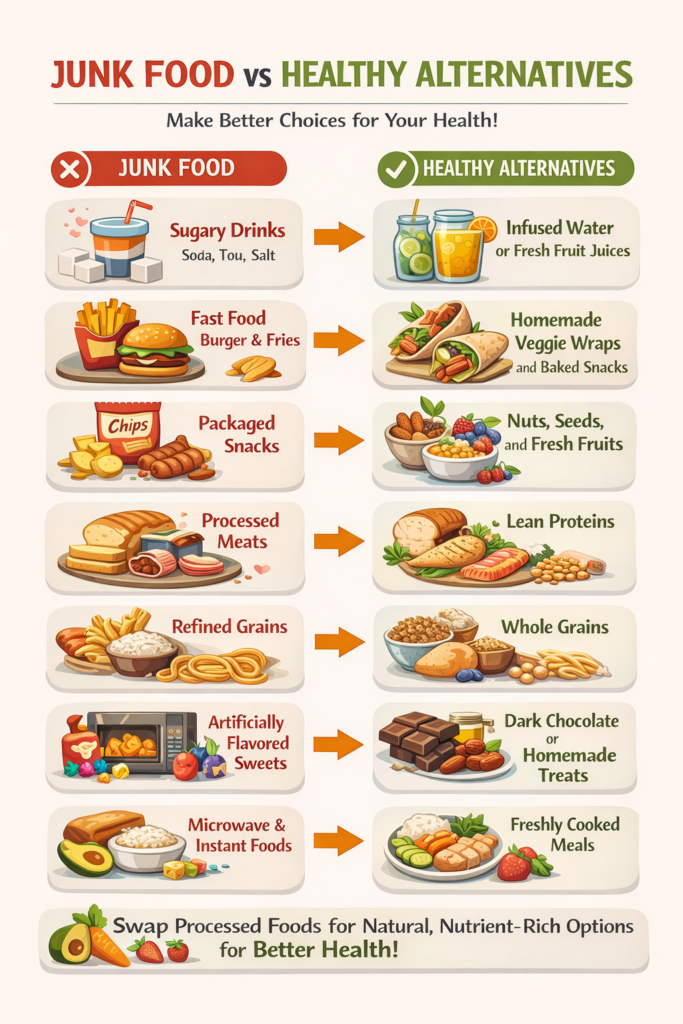
Replacing processed foods with whole, nutrient-rich options is the key to protecting your health and breaking the cycle of cravings. Here are some effective substitutions:
- Sugary Drinks → Infused Water or Fresh Fruit Juices
Swap sodas and sweetened drinks with water, herbal teas, or freshly squeezed fruit juices. Infused water with lemon, cucumber, or mint keeps you hydrated while reducing sugar intake. - Fast Food Burgers & Fries → Homemade Veggie Wraps and Baked Snacks
Replace greasy burgers and fried potatoes with whole grain wraps, grilled vegetables, baked sweet potato fries, or air-fried snacks. These provide fiber, vitamins, and healthy carbs without excess fat. - Packaged Snacks → Nuts, Seeds, and Fresh Fruits
Instead of chips, cookies, or candy, keep almonds, walnuts, sunflower seeds, or seasonal fruits handy. These are nutrient-dense, satisfy hunger, and provide essential vitamins and minerals. - Processed Meats → Lean Proteins
Swap hot dogs, sausages, and processed deli meats with grilled chicken, fish, legumes, or tofu. Lean proteins support muscle growth and reduce exposure to harmful additives. - Refined Grains → Whole Grains
Replace white bread, white rice, and pasta with whole grain bread, brown rice, quinoa, or oats. These improve digestion, regulate blood sugar, and provide long-lasting energy. - Artificially Flavored Sweets → Dark Chocolate or Homemade Treats
Instead of candy and chocolate with artificial flavors, enjoy dark chocolate with 70%+ cocoa, or make your own desserts using natural sweeteners like honey or dates. - Microwave and Instant Foods → Freshly Cooked Meals
Prepare meals at home using fresh vegetables, legumes, grains, and lean proteins. Cooking at home ensures you control the ingredients, flavor, and nutritional value.
Takeaway Quote:
“Swap processed foods for natural, nutrient-rich alternatives—your body, brain, and future self will thank you.”
Conclusion
Processed foods may be tasty and convenient, but they carry hidden health risks affecting metabolism, heart, kidneys, brain, and immunity. From high sugar, salt, and unhealthy fats to chemical additives and nutrient loss, each bite of processed food has a cost. Children are especially vulnerable, as early exposure shapes lifelong habits and cognitive development.
The solution is clear: choose whole, natural, and nutrient-rich meals, limit processed snacks, and educate families about hidden dangers. Awareness, mindful eating, and healthier alternatives are the keys to preventing chronic diseases, protecting children, and sustaining long-term health.