


The greed of the few could end the future of all humanity
1️⃣ Destruction of Deep-Sea Coral and Ancient Ecosystems
Deep-sea mining is rapidly emerging as a major environmental concern for scientists worldwide. Studies indicate that regions close to mining activity in the Clarion-Clipperton Zone have experienced roughly a 37% drop in animal populations, highlighting the serious risks to fragile marine ecosystems. Deep sea coral and ancient ocean ecosystems are among the oldest living systems on Earth. Unlike shallow-water coral reefs, deep-sea corals grow extremely slowly—sometimes only a few millimeters per year—and can live for thousands of years. These ecosystems exist in total darkness, cold temperatures, and high pressure, forming a mysterious underwater world that scientists are still discovering.
Deep sea mining threatens to destroy these ancient ecosystems forever.
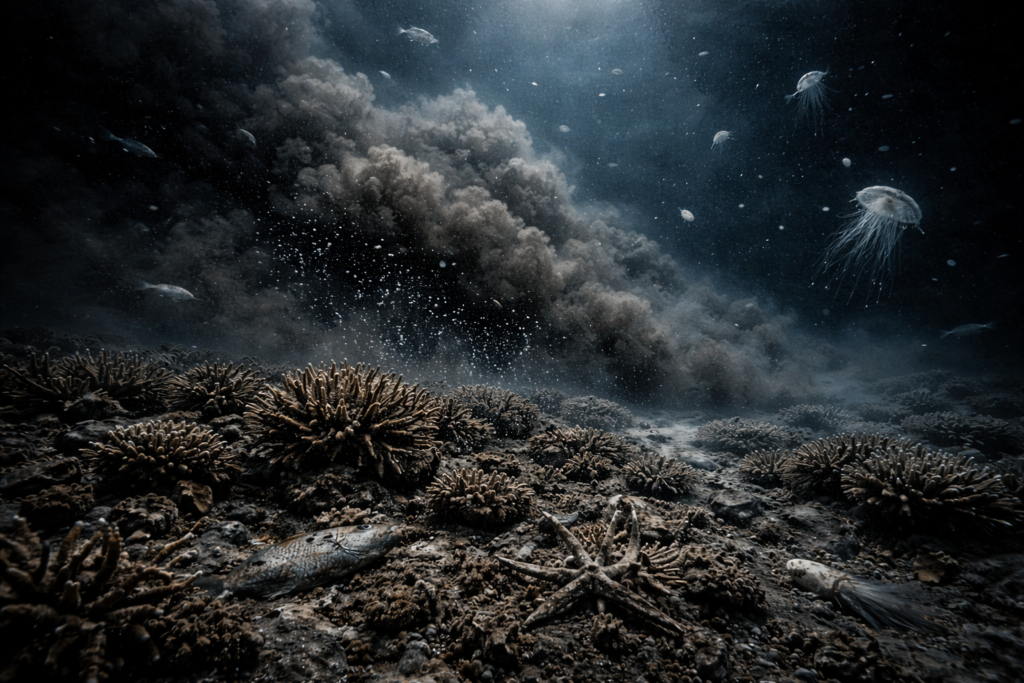
Mining machines are designed to scrape and crush the ocean floor to extract valuable metals like cobalt, nickel, manganese, and rare earth elements. When these machines move across the seabed, they physically destroy coral structures, sponges, and microbial habitats that took millions of years to form. Unlike forests or land ecosystems, deep-sea ecosystems cannot recover quickly. In many cases, scientists believe they may never recover at all.
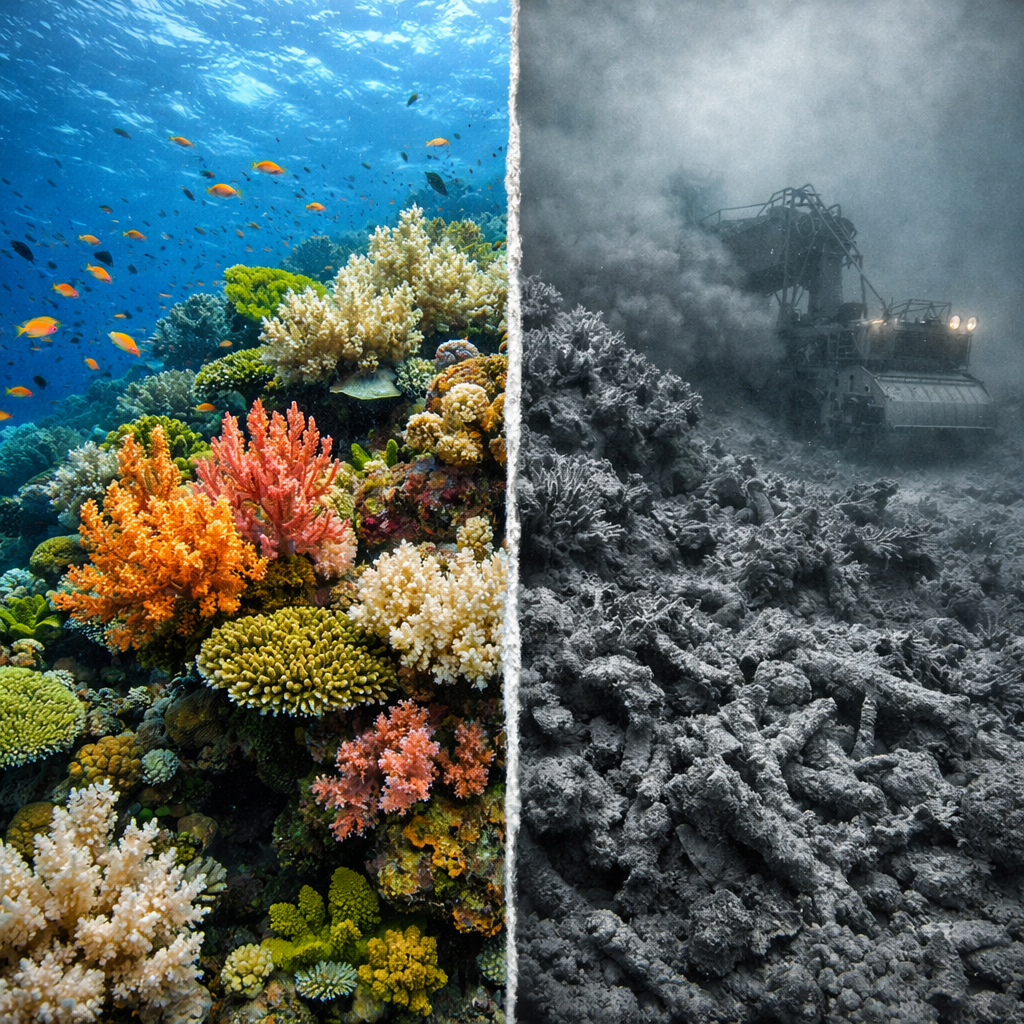
Deep-sea mining will destroy the ocean’s treasures — leaving only lifeless saltwater behind
Deep-sea corals are not just beautiful structures; they are critical habitats for countless marine species. Fish, shrimp, crabs, and microscopic organisms use corals as shelter, breeding grounds, and food sources. When corals are destroyed, entire marine communities collapse. This can lead to a chain reaction that affects the entire ocean ecosystem.
Another major danger is that deep sea corals play an important role in ocean chemistry and carbon cycles. These ecosystems help store carbon and regulate nutrients in the ocean. Destroying them could weaken the ocean’s ability to absorb carbon dioxide, which may accelerate global warming. This means deep sea mining could indirectly contribute to climate change, making the future more dangerous for humanity.
Scientists warn that deep-sea ecosystems are among the least understood environments on Earth. Many species living there have never been discovered or studied. If mining begins on a large scale, countless unknown species could go extinct before humans even learn about them. This would be one of the greatest biodiversity losses in modern history.
Despite these terrifying risks, some developed countries and corporations are pushing to start deep sea mining for economic benefits. They argue that these minerals are needed for electric vehicles, renewable energy, and modern technology. However, sacrificing ancient ecosystems for short-term technological progress raises serious ethical and environmental questions.
Destroying deep-sea coral ecosystems means destroying a part of Earth’s natural heritage that cannot be rebuilt. These ecosystems existed long before humans and could have survived for millions of years more. But in just a few decades, human greed and industrial ambition could erase them forever.
If deep sea mining continues without strict global regulations and scientific understanding, our children may inherit an ocean that is silent, lifeless, and damaged beyond repair. Protecting deep-sea ecosystems is not only an environmental responsibility—it is a moral duty for humanity’s future.
2️⃣ Mass Death of Deep Ocean Marine Life
The deep ocean has always been one of the most mysterious and fragile ecosystems on Earth. For millions of years, countless species of fish, invertebrates, and microorganisms have thrived in this dark, cold, and high-pressure environment. Yet, the growing practice of deep sea mining threatens to wipe out vast populations of these marine creatures, creating a silent catastrophe beneath the waves.
When industrial mining machines scrape the seabed, they not only destroy coral structures but also directly kill countless animals that live in or around them. Fish, shrimp, crabs, and microscopic life are crushed, buried under sediment, or suffocated by the clouds of toxic particles stirred up by these machines. Unlike surface ecosystems, the deep ocean is extremely slow to recover. Many species reproduce slowly, and some may not survive even a single disturbance. What mining companies see as “resources” are, in reality, complex living communities that have taken millions of years to evolve.
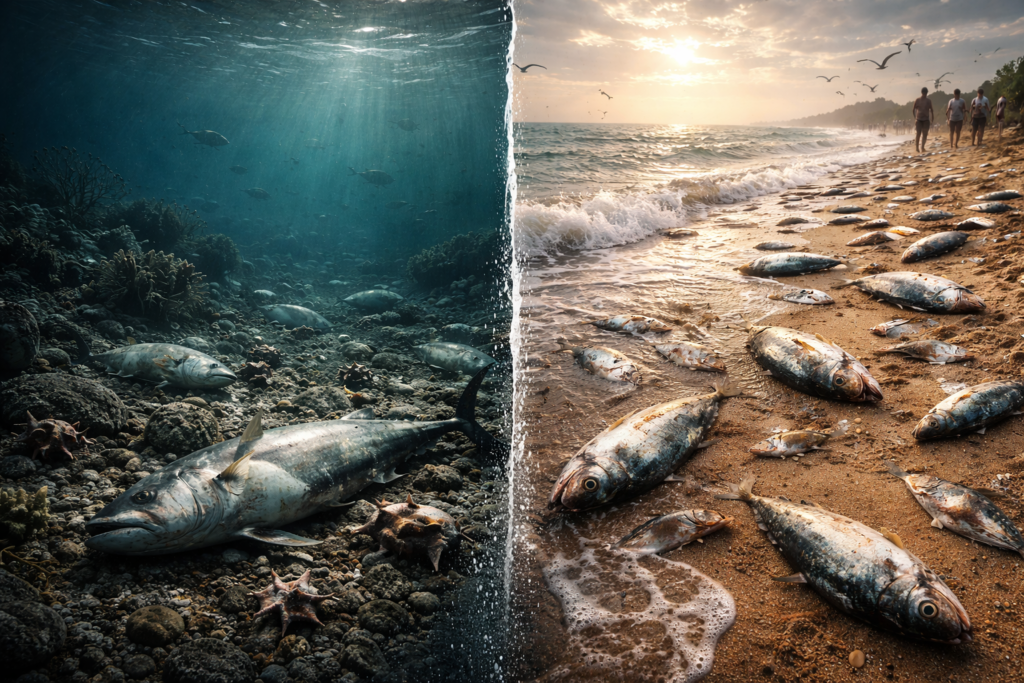
Our oceans will lose everything, and marine food sources will disappear
The consequences of mass death in the deep sea go beyond the ocean floor. These creatures are part of a delicate food chain. Large fish, whales, and seabirds depend on deep-sea organisms for survival. When mining destroys these populations, it triggers a domino effect, destabilizing entire marine ecosystems. Fish that once supplied humans with food may disappear, threatening global food security. Tiny organisms, like plankton and benthic microbes, play a critical role in carbon storage and oxygen production. Killing them could indirectly accelerate climate change and reduce the ocean’s capacity to absorb carbon dioxide.
Another horrifying aspect is the irreversibility of deep-sea deaths. Unlike forests or rivers, where restoration projects can sometimes revive ecosystems, deep-sea habitats cannot be easily repaired. Sediment plumes from mining can drift for hundreds of kilometers, suffocating life far from the mining site. Entire populations may vanish before scientists even have a chance to study or name them. Some experts warn that deep sea mining could be responsible for one of the largest mass extinctions in modern human history, hidden in the dark depths of the ocean.
Despite these risks, many governments and corporations continue to approve mining operations in the name of economic growth. Rare metals like cobalt, nickel, and manganese are essential for electric vehicles, renewable energy, and modern electronics. But is the destruction of millions of marine lives worth these short-term gains? Scientists argue that humanity is gambling with the ocean’s life-support system, putting both the environment and future generations at risk.
The mass death of deep ocean life is a silent horror, largely invisible to most people. Yet, it is a problem with global consequences. Protecting the deep ocean is not only about saving unknown species; it is about safeguarding the entire marine food web, preserving the balance of our planet, and ensuring that future generations inherit a world rich in life rather than a silent, desolate ocean.
Humanity faces a choice: continue mining the depths for profit, or recognize that some parts of our planet are too precious to destroy. The life of the deep sea cannot speak for itself—but if we listen carefully, the devastation it suffers today will echo in the scarcity, hunger, and climate chaos of tomorrow.
3️⃣ Toxic Sediment Clouds Spreading Across Oceans
Deep sea mining does more than crush coral and kill marine life—it stirs up massive sediment clouds that poison the oceans far beyond the mining site. These dark, toxic clouds, sometimes called “plumes of death”, spread for hundreds of kilometers, suffocating life and contaminating the fragile marine environment. The scale and invisibility of this destruction make it one of the most terrifying consequences of industrial mining in the ocean.
When machines scrape the seabed to extract valuable metals like cobalt, nickel, and manganese, they release sediment containing heavy metals and chemicals that have been trapped in the ocean floor for millennia. This sediment rises into the water column, creating murky clouds that block sunlight. Sunlight is essential for photosynthesis, which powers the marine food chain from tiny plankton to large fish and whales. Without it, entire ecosystems collapse.
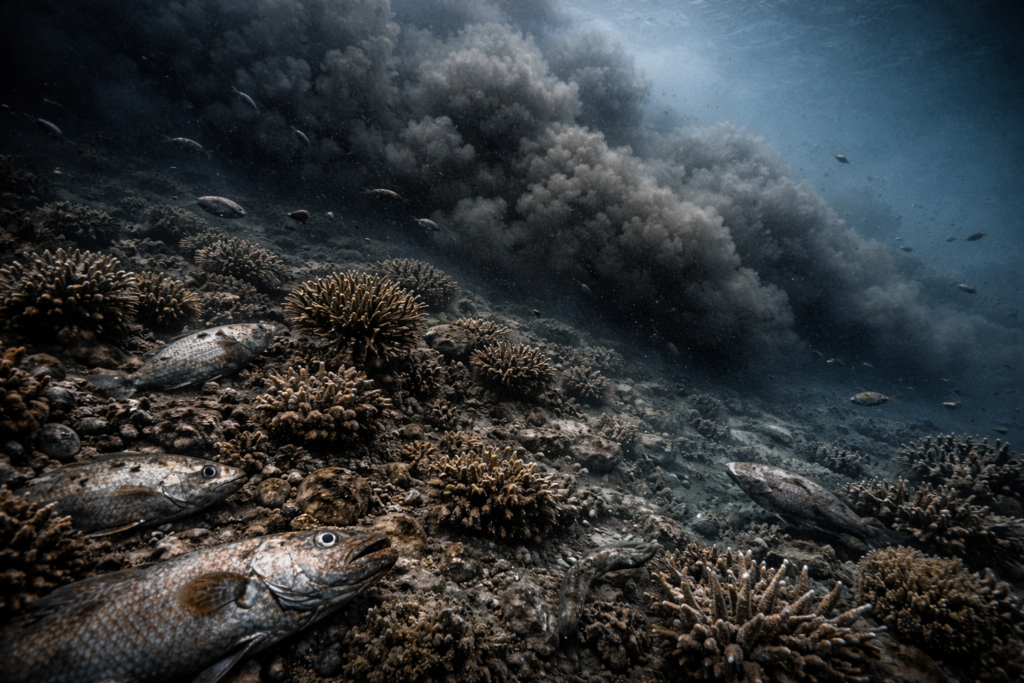
The sediment itself is toxic. It contains metals and compounds that are harmful to marine organisms, including fish, crabs, shrimp, and microscopic life forms. Larvae and juvenile species are particularly vulnerable—they cannot escape the clouds and often die before reaching maturity. Even adult species may ingest toxic particles, accumulating poisons in their bodies. This contamination travels up the food chain, ultimately threatening humans who rely on fish and seafood for protein.
Another terrifying aspect of sediment clouds is their long-lasting impact. Once disturbed, the sediment can take decades to settle and may permanently alter the seabed. Unlike surface pollution, which can sometimes be cleaned or diluted, deep-sea plumes drift across hundreds of kilometers, affecting multiple ecosystems simultaneously. Scientists warn that these plumes could wipe out entire populations of deep-sea species before humanity even fully understands what exists in these hidden habitats.
The environmental consequences go even further. Toxic sediment clouds disrupt nutrient cycles, oxygen levels, and even the ocean’s ability to absorb carbon dioxide. This can weaken the ocean’s natural climate regulation, indirectly accelerating global warming. In other words, the sediment plumes created by deep-sea mining do not just destroy life beneath the waves—they also jeopardize the future of the planet.
Despite the warnings, mining companies and some governments continue to push forward, motivated by the growing demand for metals used in electronics, batteries, and renewable energy technologies. The irony is striking: while humans claim to be protecting the planet through green technology, they are simultaneously destroying the deep-sea ecosystems that keep the oceans and climate in balance.
Toxic sediment clouds are silent killers. They move invisibly beneath the waves, slowly poisoning marine life, collapsing food chains, and creating an ecological nightmare. Without immediate regulation and global awareness, deep-sea mining may unleash one of the most devastating environmental crises in modern history. Protecting the oceans from this invisible threat is not just a choice—it is a moral responsibility for humanity and a vital step in securing a future where the seas remain alive and abundant.
4️⃣ Poisoning of Fish and Human Food Chain
Deep sea mining does more than destroy coral and stir toxic sediment—it has a direct impact on the food humans rely on. The metals and chemicals released from the seabed, including cobalt, nickel, and manganese, are highly toxic to marine life. When these substances enter the bodies of fish and shellfish, they accumulate in tissues, creating a dangerous chain of contamination that eventually reaches humans.
Fish are the backbone of the diet for billions of people worldwide. From small communities along coastlines to global markets, seafood provides essential protein, omega-3 fatty acids, and other nutrients vital for health. However, when fish ingest heavy metals or toxic particles from mining plumes, they become unsafe to eat. Studies have shown that prolonged exposure to heavy metals like mercury, cadmium, and nickel can lead to neurological damage, organ failure, and developmental problems in humans—especially in children and pregnant women.

The food chain impact is a domino effect. Small fish that ingest sediment particles are eaten by larger predators, which in turn are consumed by humans. Toxic metals are biomagnified, meaning their concentration grows at each level of the food chain. This creates a hidden, silent threat: while the ocean may appear alive from the surface, the very seafood we consume is being slowly poisoned.
The consequences extend beyond health. Fishing industries and coastal economies are at risk as contamination reduces the number of safe fish available. Communities that depend on daily catches for livelihood may face food scarcity, economic instability, and loss of cultural traditions connected to fishing. The deep ocean may seem distant to most people, but its contamination directly affects life on land, making deep sea mining a global concern.
Moreover, the toxic substances released are persistent in the environment. Even if mining stops, the accumulated metals remain in the water and sediment for decades, continuing to harm fish and shellfish populations. Scientists warn that this could permanently alter the marine ecosystem, reducing biodiversity and destabilizing populations that humans depend on for food.
Despite the clear dangers, governments and corporations are pushing forward with deep sea mining, citing economic benefits and the growing demand for metals used in technology. Yet this “progress” comes at the cost of human health, food security, and ocean life. The question is simple: should humanity risk the health of billions for metals that can be sourced more sustainably on land?
Protecting the oceans from contamination is not just an environmental responsibility—it is a human survival issue. By halting deep sea mining and enforcing strict regulations, we can prevent toxic metals from entering the food chain, safeguard seafood for future generations, and preserve the delicate balance of life beneath the waves.
The poisoning of fish and the human food chain is a hidden horror of industrial exploitation. While the destruction may be out of sight, its consequences will be felt on every dinner table, in every coastal village, and in the health of millions worldwide. Protecting our oceans today is protecting humanity itself.
5️⃣ Loss of Biodiversity and Unknown Species Extinction
The deep ocean is home to some of the rarest and most mysterious species on the planet. From fragile corals and strange invertebrates to unknown fish and microorganisms, these creatures have evolved over millions of years in an environment humans barely understand. Yet, deep sea mining is threatening to erase this hidden biodiversity forever, often before science even has a chance to study it.
When mining machines scrape the seabed to extract metals like cobalt, nickel, and rare earth elements, they destroy habitats instantly. Unlike terrestrial ecosystems, where some species may migrate or adapt, deep-sea creatures have nowhere to go. Many are highly specialized for extreme pressure, cold, and darkness. Even minor disturbances can be fatal, and entire populations may disappear in a matter of days. The loss is not just of individual species, but of entire ecosystems that rely on them.
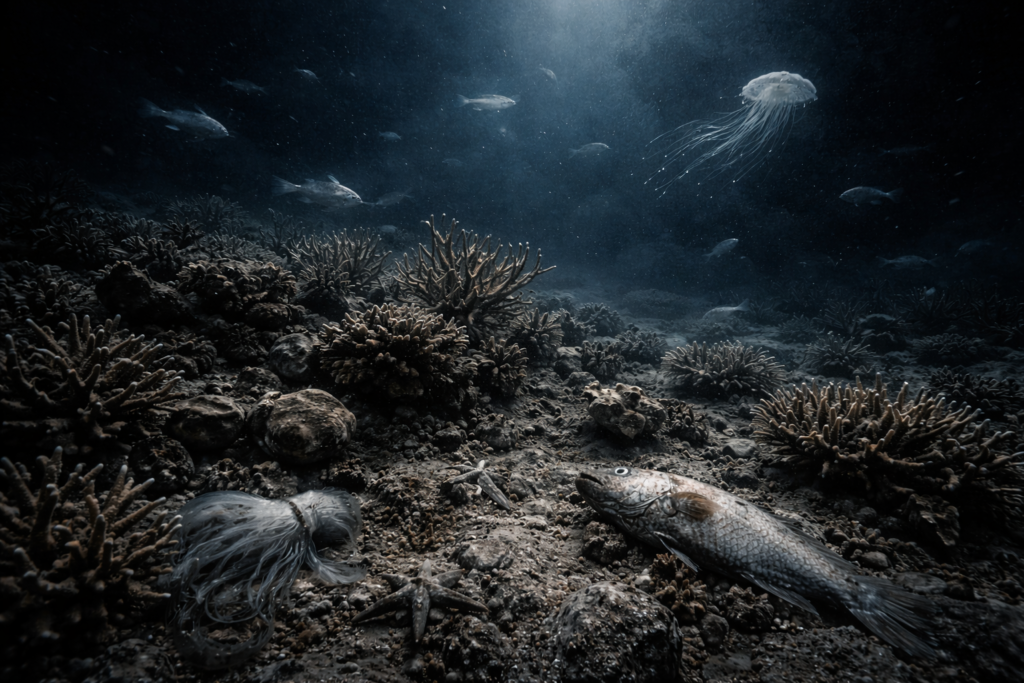
One of the most terrifying aspects is that a vast number of deep-sea species remain unknown. Scientists estimate that we have only discovered a fraction of life in the deep ocean. Mining in these areas could trigger mass extinctions before we even know what is being lost. This means humanity is deciding the fate of countless species without any understanding of their ecological role, genetic value, or potential benefits for medicine and technology.
Biodiversity is crucial for ecosystem stability. Each species, no matter how small, contributes to the ocean’s food web, nutrient cycles, and carbon storage. When species disappear, it weakens these processes, affecting not just the deep sea but the entire planet. The collapse of one population can ripple upward, impacting larger predators, commercial fish stocks, and ultimately human survival.
The ethical implications are profound. Humans are extracting resources from an environment we barely understand, for short-term technological gain. We risk erasing evolutionary history, destroying species that have survived for millions of years. Unlike the destruction of a forest, which can sometimes be mitigated through replanting or conservation, lost deep-sea species cannot be replaced. Once gone, they are gone forever.
Governments and corporations often justify deep-sea mining by citing economic growth and the global demand for metals used in technology. But this progress comes at a hidden cost: the silent extinction of life forms that may hold scientific, medicinal, or ecological value we will never know. Protecting biodiversity is not only about saving individual species—it is about preserving the balance of life on Earth.
The deep ocean may seem distant, but its fate is tied to humanity’s survival. The loss of biodiversity and the extinction of unknown species is a warning bell for the planet. If we continue mining without regulation or understanding, we are not only destroying the ocean’s richness but also threatening the future of life on Earth, including our own.
6️⃣ Disruption of Ocean Carbon Storage and Climate System
The deep ocean is not just a home for mysterious creatures—it is a vital regulator of Earth’s climate. Millions of tons of carbon are naturally stored in deep-sea sediments, corals, and marine life, helping to keep the planet’s atmosphere balanced. However, deep sea mining is now threatening to destroy this natural carbon storage system, with devastating consequences for the global climate.
When industrial mining machines scrape the seabed, they disturb ancient sediments, releasing stored carbon back into the water and eventually into the atmosphere. This carbon, which took millions of years to sequester, becomes part of the ocean-atmosphere cycle, potentially accelerating global warming. In essence, deep sea mining is undoing the ocean’s natural role as a carbon sink, undermining one of Earth’s most important defenses against climate change.
The problem goes beyond carbon release. Sediment plumes stirred by mining also smother marine organisms that play a key role in carbon cycling, such as plankton, deep-sea sponges, and corals. Plankton, for example, absorbs carbon dioxide during photosynthesis and forms the base of the ocean’s food web. Killing these organisms reduces the ocean’s ability to capture carbon, further destabilizing the climate system.
The disruption is cumulative. Each mining operation adds more sediment, toxins, and destruction to the deep-sea environment. Over time, the ocean’s ability to regulate temperature, store carbon, and sustain marine ecosystems is severely weakened. Scientists warn that this may trigger unpredictable changes in weather patterns, stronger storms, and rising sea temperatures, affecting humans across the globe.
Additionally, mining in these areas may alter ocean currents and circulation, which are critical for distributing heat and nutrients around the planet. Any disruption could amplify climate instability, creating localized disasters and long-term ecological imbalance. Unlike land-based climate interventions, deep-sea damage is largely invisible and poorly understood, making it harder for policymakers and the public to respond before it’s too late.
Despite the clear dangers, governments and corporations continue to approve mining in deep-ocean zones, citing economic gains and the demand for metals used in renewable energy and electronics. Yet this “progress” comes at the expense of the planet’s climate system and future generations. Humanity is gambling with a system that took millions of years to evolve—one that sustains life not just underwater but on land as well.
Protecting the ocean’s carbon storage and climate regulation functions is not optional; it is a moral and survival imperative. Without urgent intervention, deep-sea mining could destabilize Earth’s climate, threaten global food security, and exacerbate environmental disasters for decades or even centuries.
The deep ocean is silent, but its impact on the climate is profound. Disturb it at your peril—because the carbon stored in its depths is keeping our planet alive. Destroy it, and humanity may face consequences far greater than we can imagine.
7️⃣ Acceleration of Global Warming and Climate Instability
The oceans are Earth’s greatest regulators of climate, absorbing heat and carbon dioxide, and distributing energy across the globe through currents. Deep sea mining, however, is disrupting these natural systems, contributing to the acceleration of global warming and the instability of climate patterns worldwide. This is a hidden environmental crisis, unfolding silently beneath the waves, yet with consequences that could affect every human on the planet.
Mining machines that scrape the ocean floor release trapped carbon and toxic sediments back into the water. Deep ocean sediments act as long-term carbon storage, keeping greenhouse gases locked away for millennia. When disturbed, this carbon can eventually reach the atmosphere, adding to human-induced emissions and exacerbating global warming. Unlike deforestation or fossil fuel burning, this process is largely invisible, making it easy for industrial activities to continue unchecked.
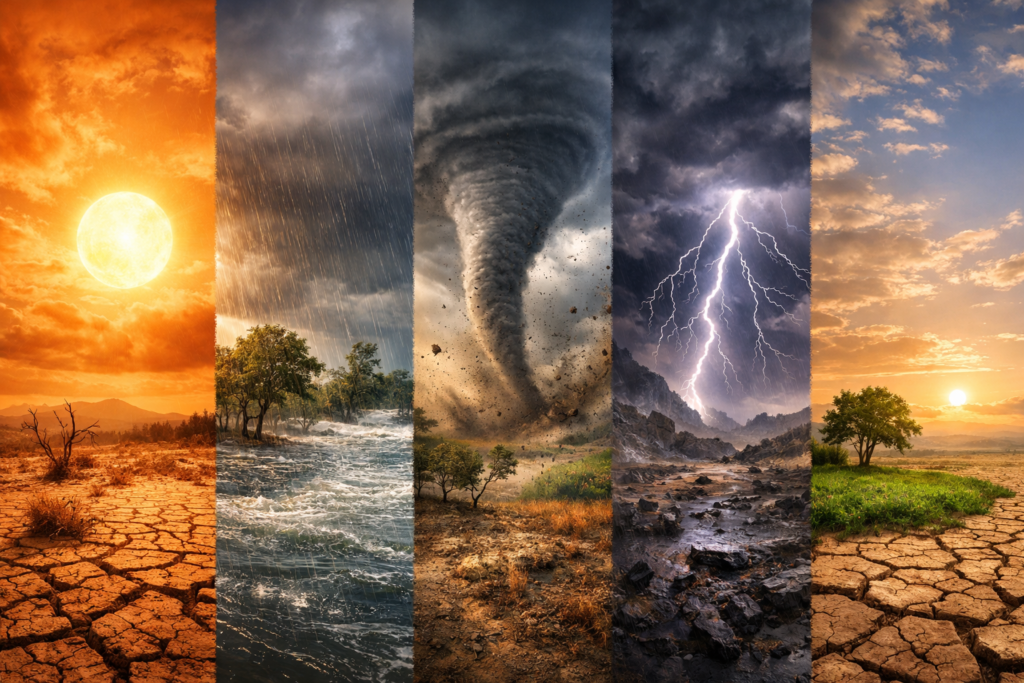
Extreme weather will turn our living planet into a battlefield for survival
The acceleration of climate change is not just theoretical—it has real, immediate consequences. Warmer oceans fuel stronger storms, hurricanes, and typhoons, putting millions of lives at risk. Rising temperatures disrupt rainfall patterns, causing droughts in some regions and floods in others. These extreme events threaten agriculture, food security, and water resources, creating a chain reaction that impacts every aspect of human society. Deep sea mining, though distant from cities, contributes silently to these destabilizing forces.
Beyond temperature, deep sea mining also threatens the ocean’s natural circulation and currents, which are essential for distributing heat and nutrients. Even small disruptions in deep-water flows can lead to massive regional climate anomalies. Scientists warn that these disturbances could trigger feedback loops, where warmer waters reduce plankton populations, weakening carbon absorption, and further accelerating climate change—a self-reinforcing cycle with catastrophic potential.
Another hidden danger lies in species extinction and ecosystem collapse caused by mining. The death of carbon-storing organisms like deep-sea corals, sponges, and plankton undermines the ocean’s ability to regulate climate naturally. The loss of biodiversity weakens the resilience of marine ecosystems, making them less capable of adapting to changing temperatures or absorbing carbon, further destabilizing the planet’s climate system.
Despite the evidence, deep sea mining is expanding. Governments and corporations justify it as a necessary source of metals for technology and renewable energy. Yet, this short-term gain comes at the expense of long-term planetary stability. Humanity is gambling with systems that took millions of years to evolve—systems that are critical for life on Earth.
The acceleration of global warming and climate instability is a silent, invisible horror. While we may not see it happening beneath the ocean’s surface, its effects are felt in every heatwave, storm, flood, and wildfire. Protecting deep-sea ecosystems is not just an environmental obligation—it is a climate survival strategy. If ignored, deep sea mining could be one of the most dangerous accelerators of global warming in human history.
8️⃣ Potential Impact on Sea Level Rise and Ocean Circulation
The deep ocean is a critical part of Earth’s climate engine. It stores vast amounts of heat, regulates currents, and stabilizes global weather systems. Deep sea mining, however, is increasingly disrupting this delicate balance, threatening to accelerate sea level rise and alter ocean circulation with potentially catastrophic consequences for life on Earth.
Mining activities on the seabed disturb ancient sediments and underwater structures that play a vital role in storing carbon and regulating water density. When these sediments are released into the water column, they not only damage ecosystems but also affect the natural flow of ocean currents. These currents are responsible for transporting heat around the planet, influencing weather patterns, and maintaining the distribution of marine nutrients. Any disruption can trigger unexpected climate events, from prolonged droughts to intensified storms.
Sea level rise is another major concern. Deep sea mining contributes indirectly to rising seas by releasing stored carbon and weakening the ocean’s ability to act as a carbon sink. Warmer oceans expand, ice sheets melt faster, and currents that normally stabilize regional climates become unpredictable. Low-lying coastal regions, home to millions of people, are particularly vulnerable. Communities that rely on fishing, agriculture, and tourism face not only environmental but also economic and social crises if the oceans become unstable.
The destruction of deep-sea ecosystems compounds the problem. Coral reefs, sponges, and plankton help regulate ocean chemistry and carbon storage. When these organisms are destroyed by mining, the ocean’s ability to absorb heat and carbon is reduced, accelerating global warming and further contributing to sea level rise. In other words, the impacts of deep sea mining are both local and global, silent yet profound.
Ocean circulation changes can also have cascading effects on marine biodiversity. Altered currents may displace fish populations, disrupt breeding cycles, and even threaten species that humans rely on for food. These shifts ripple through the food chain, impacting not only marine life but also the millions of people dependent on seafood. The ocean’s role as the lifeblood of the planet is being compromised, and the consequences may be irreversible.
Despite these risks, mining operations continue in the name of economic progress. Governments and corporations prioritize access to metals for electronics, batteries, and renewable energy infrastructure, often ignoring the long-term environmental consequences. Yet the planet cannot negotiate with short-term profit. Sea level rise and disrupted ocean circulation threaten every coastal city, agricultural region, and human settlement on Earth.
Protecting the oceans from deep-sea mining is not just an environmental concern—it is a human survival issue. The next generation depends on the stability of ocean currents and sea levels for food security, clean water, and habitable land. By safeguarding the deep ocean, humanity can prevent the worst consequences of climate instability and rising seas.
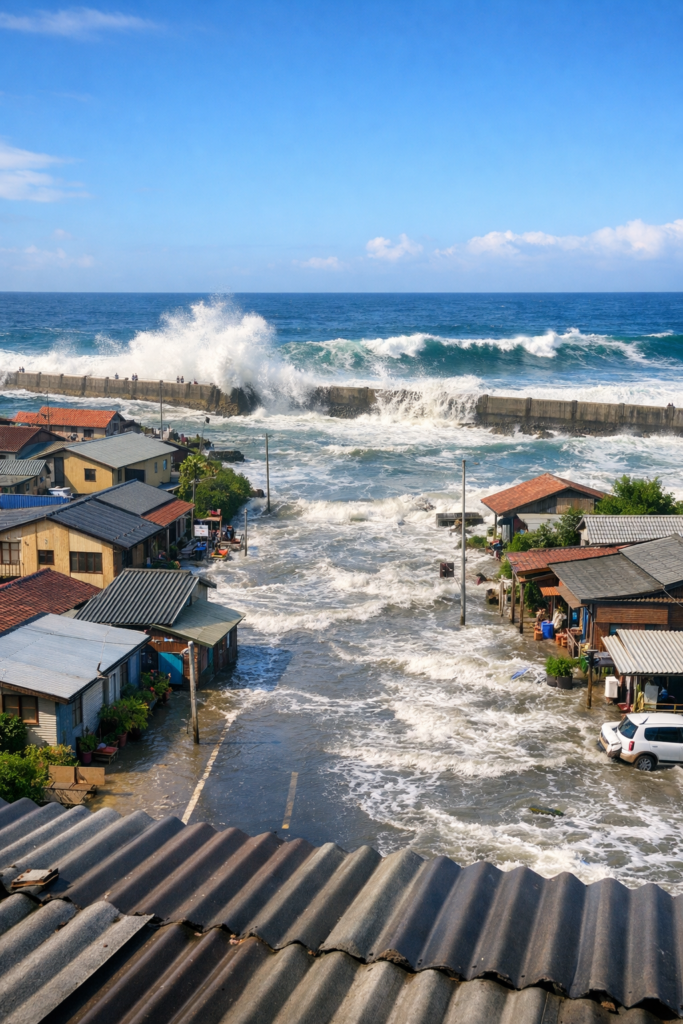
Rising sea levels threaten coastal communities as waves breach safety walls and flood residential colonies — a potential future linked to environmental imbalance and deep sea ecosystem disruption.
The hidden depths of the ocean may seem distant, but their influence touches every corner of the Earth. Ignoring their destruction is a gamble humanity cannot afford to take. Sea level rise and altered circulation are not abstract scientific concepts—they are imminent threats, and deep sea mining is accelerating them faster than most people realize.
Noise Pollution Destroying Whale and Dolphin Communication
The ocean is often imagined as a silent blue world. In reality, it is alive with sound. For whales and dolphins, sound is not just communication — it is survival. However, increasing ocean noise pollution is disrupting their natural behavior, threatening their existence, and damaging entire marine ecosystems.
As industrial activities expand into deeper waters, the underwater world is becoming dangerously loud.
How Whales and Dolphins Use Sound to Survive
Unlike humans, whales and dolphins rely heavily on sound rather than sight. In the deep ocean, where sunlight cannot reach, sound travels faster and farther than light.
They use sound for:
- Communication with pod members
- Navigation across vast ocean distances
- Echolocation to hunt prey
- Mating calls during breeding seasons
- Warning signals to avoid predators
Some whale species communicate across hundreds of miles. Dolphins use complex clicking patterns to create a detailed “sound map” of their environment.
When these sounds are blocked or distorted, confusion and stress follow.
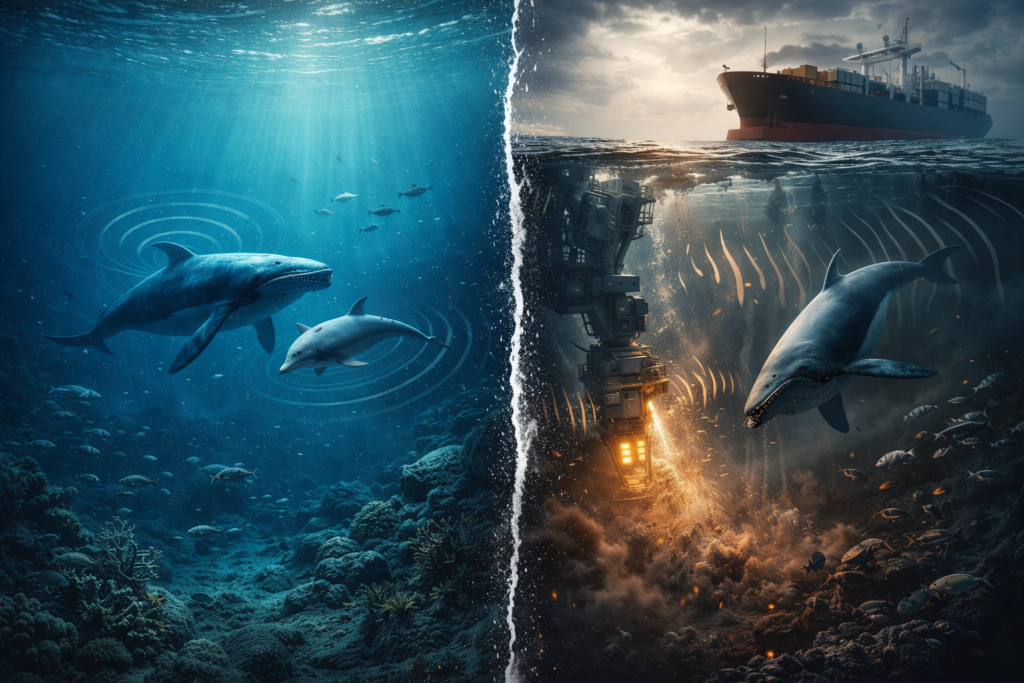
Extreme human activity will silence the voice of the ocean
What Is Causing Ocean Noise Pollution?
Human activities have significantly increased underwater noise levels over the past decades.
Major sources include:
1. Commercial Shipping
Global shipping traffic has grown dramatically. Engine noise and propeller cavitation create constant low-frequency sounds that overlap with whale communication frequencies.
2. Deep-Sea Mining and Drilling
Exploration machinery, seismic surveys, and heavy equipment generate intense vibrations that travel long distances underwater.
3. Military Sonar
High-intensity sonar systems can disorient whales, sometimes causing strandings and mass panic.
4. Oil and Gas Exploration
Airguns used for seismic testing produce extremely loud blasts, repeated every few seconds for weeks.
The result? A once-natural acoustic environment is now overwhelmed by mechanical noise.
The Impact on Whales and Dolphins
Noise pollution does not just “annoy” marine animals. It has serious biological consequences.
Disrupted Communication
Whales may not hear mating calls or group signals, leading to reduced reproduction rates.
Increased Stress Levels
Constant noise elevates stress hormones, weakening immune systems and reducing lifespan.
Navigation Failure
Dolphins rely on echolocation. Excess noise can interfere with their ability to find food or avoid danger.
Strandings and Mass Deaths
In some cases, sonar exposure has been linked to mass whale strandings, where confused animals beach themselves.
Over time, chronic acoustic disturbance can cause population decline.
A Threat to the Entire Marine Ecosystem
Whales play a crucial ecological role. They help regulate the marine food chain and even contribute to carbon capture by supporting plankton growth through nutrient cycling.
If whale and dolphin populations decline:
- Marine biodiversity suffers
- Fish populations shift
- Ocean carbon cycles weaken
- Global climate regulation is affected
Ocean noise pollution is not just a wildlife issue — it is a climate and ecosystem crisis.
Why This Matters to Humanity
Healthy oceans support billions of people through:
- Seafood supply
- Coastal economies
- Climate stabilization
- Oxygen production
If marine communication collapses, marine ecosystems destabilize — and human food security becomes uncertain.
Silencing the ocean means weakening the planet’s life support system.
Solutions to Reduce Ocean Noise Pollution
The crisis is serious, but solutions exist:
- Quieter ship engine technology
- Speed reductions in sensitive marine zones
- Seasonal restrictions on seismic testing
- Marine protected acoustic areas
- Stricter regulations on deep-sea mining
Governments, industries, and international organizations must work together to protect marine soundscapes.
Final Warning
The ocean does not need silence — it needs balance.
If industrial noise continues unchecked, whales and dolphins may lose their voice. And when the guardians of the ocean fall silent, the damage will echo far beyond the sea.
Irreversible Environmental Damage for Future Generations
(Final Part of “Deep Sea Mining Approval”)
Deep-sea mining is being approved at an alarming pace, promising wealth and resources, but the true cost of this industrial greed is rarely acknowledged. The oceans are not infinite; they are delicate, interconnected ecosystems. Every drill, every explosion, and every extraction in the deep sea permanently alters these environments. What we destroy today will be lost forever, and the consequences will fall upon generations who have no voice in these decisions.
A Future Shaped by Irreversible Damage
Once deep-sea ecosystems are disturbed, natural recovery is often impossible. Sediments, corals, and rare species that have thrived for millions of years may never return. This is not a distant threat — it is a looming reality. Humans may reap short-term benefits, but the long-term consequences are catastrophic: oceans become less resilient, biodiversity declines, and the foundation of global food chains weakens.
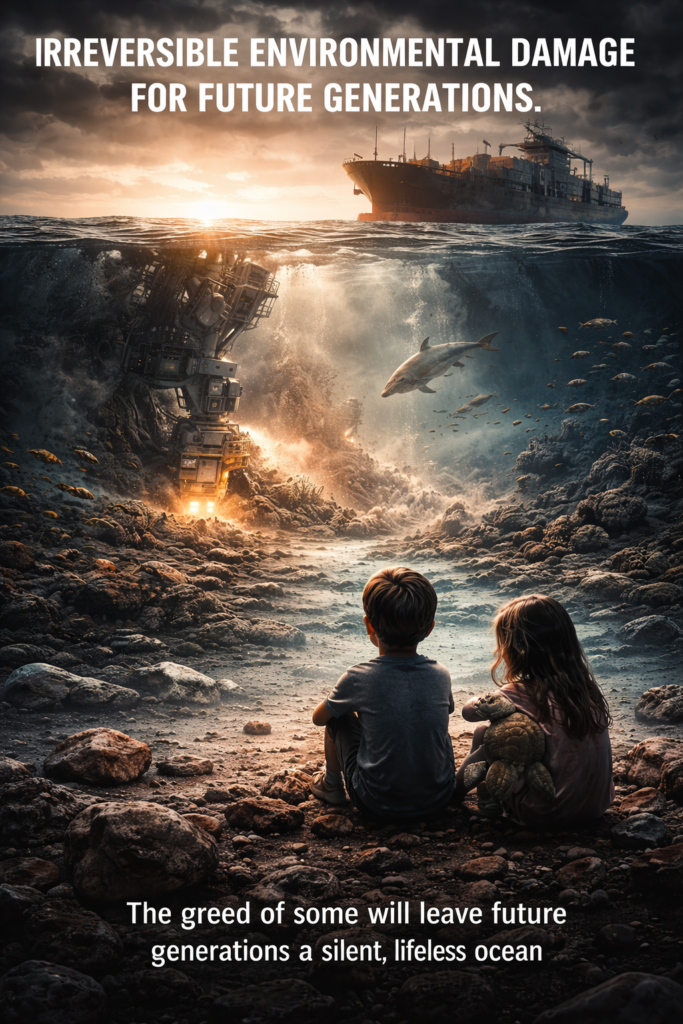
The greed of some will leave future generations a silent, lifeless ocean
Future generations will inherit a planet where marine wealth is gone, ecosystems are irreparably damaged, and opportunities to restore balance are gone. Coastal communities, fisheries, and global food security will all suffer. Deep-sea mining is not just an environmental issue; it is a human survival issue.
Greed Over Responsibility
The approval of deep-sea mining often prioritizes profit over life. While some see metals, minerals, and economic gain, the oceans see destruction. The greed of a few could determine the fate of billions. Our decisions today are shaping the world our children will inherit — one with oceans that no longer sustain life as they should, where the natural balance is lost, and where human survival becomes increasingly uncertain.
A Moral Call to Action
We cannot continue to treat the deep sea as a limitless resource. Future generations rely on the choices made today. Sustainable alternatives exist: careful regulation, strict environmental assessments, and the creation of protected marine areas. Industrial activity must respect natural limits, or we risk leaving a lifeless ocean behind.
The legacy we leave is clear: continued exploitation leads to irreversible harm. It is our moral duty to protect the planet’s ecosystems, to value life over profit, and to ensure the oceans remain a living, thriving environment for those who come after us.
Concluding Thought
“The greed of some will leave future generations a silent, lifeless ocean.”
Deep-sea mining is a crossroads. The choices made today will determine whether the oceans endure or fade, whether future generations inherit life or loss. This is not just about the sea — it is about the survival of humanity itself.