

In third world culture, noise pollution has become a strange form of entertainment for some people and a daily disturbance for others. Loud music, unnecessary honking, street celebrations, political rallies, and religious events are often seen as symbols of joy, power, or tradition. However, this cultural acceptance of excessive noise has quietly turned into a social and environmental disaster. For students, elderly people, patients, and working individuals, constant noise creates stress, sleep disorders, and reduced productivity. Unlike developed countries, where noise regulations are strictly enforced, many developing societies lack awareness and control, allowing noise to dominate daily life. This routine exposure transforms cities into chaotic sound zones, where peace becomes rare and silence is misunderstood as weakness. Noise pollution in third world society is not just an environmental issue—it is a cultural crisis that silently damages health, education, and quality of life.
🎧Music in Public Transport:
In many third world societies, public transportation is one of the most common sources of daily noise pollution. Buses, minibuses, coaches, and auto-rickshaws are widely used by millions of people for commuting to schools, offices, markets, and hospitals. Drivers and ticket collectors often play loud music to stay awake, reduce fatigue, and maintain alertness during long working hours. While this practice may help them cope with tiring schedules, it unintentionally creates serious disturbances for passengers.
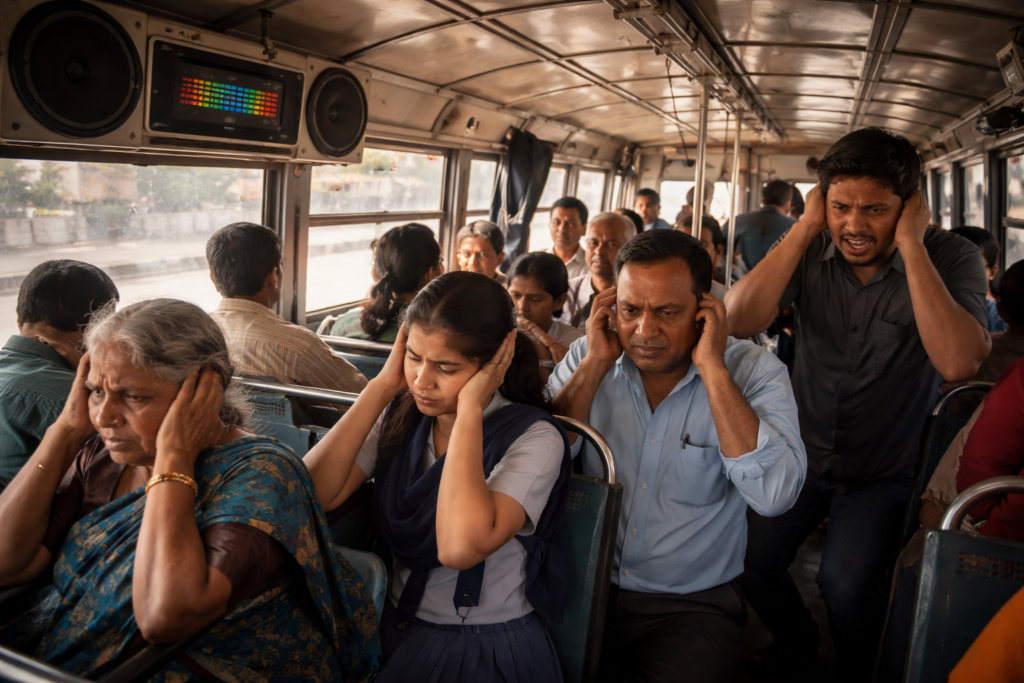
Students, elderly individuals, women, and sick passengers often experience discomfort due to high-volume music during travel. Excessive sound levels in confined vehicle spaces increase stress, headache, nausea, and anxiety, especially for people already tired or unwell. For elderly passengers and children, loud noise can be physically painful and mentally exhausting, reducing their ability to concentrate or rest during travel.
In some cases, the type of music played in public transport also creates social and psychological discomfort. Songs with inappropriate or explicit lyrics can be disturbing for female passengers and families, making public travel stressful and culturally uncomfortable. This transforms public transportation from a necessary service into an emotionally challenging environment for vulnerable groups.
The problem is not only about entertainment or personal preference; it is about public space responsibility and social ethics. Public transport is a shared environment where different age groups, genders, and health conditions coexist. Loud music in confined spaces is a form of noise pollution that violates the right to peace, dignity, and comfort for passengers.
Addressing this issue requires public awareness, driver education, and clear transport regulations that limit noise levels inside vehicles. Respectful sound policies in public transport can significantly improve urban life quality, protect mental health, and create safer and more inclusive cities.
📢 Religious Unawareness Turning into Noise Pollution
In many third world societies, religious unawareness has become one of the major contributors to noise pollution. People often extend religious activities unnecessarily with excessive loudness, despite the fact that all major religions emphasize peace, moderation, and respect for others. In Islamic tradition, it is reported that the Prophet Muhammad (peace be upon him) advised a follower to recite the Holy Quran in a low voice so that neighbors would not be disturbed, highlighting the importance of consideration and humility in worship.
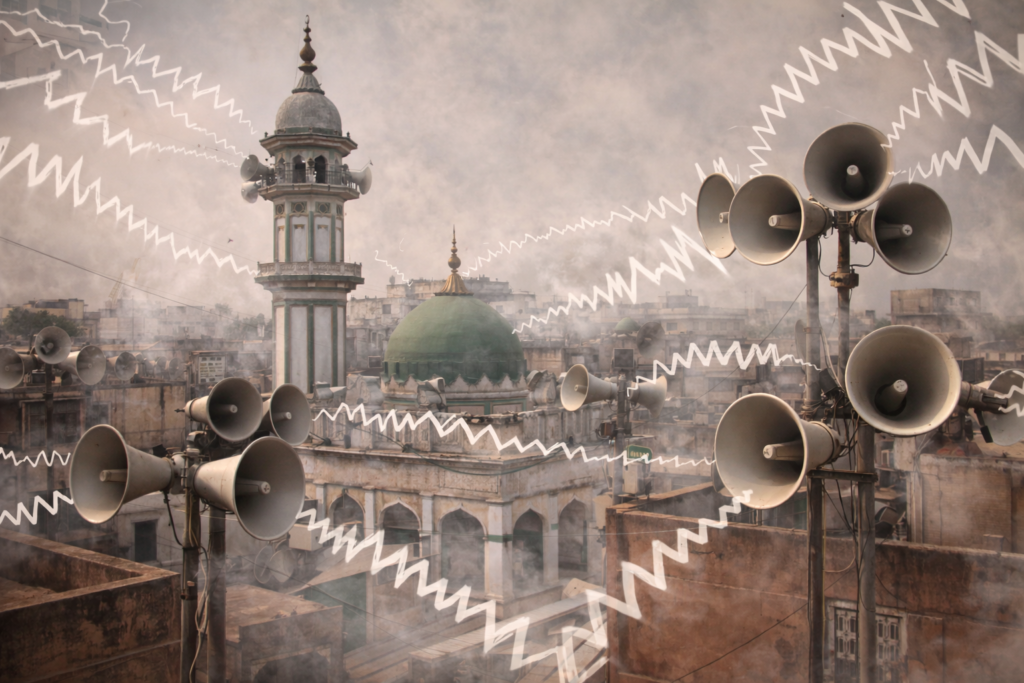
However, in many urban areas today, loudspeakers are frequently used as instruments of excessive noise rather than spiritual guidance. Repeated and prolonged loud religious announcements throughout the day disturb nearby homes, schools, workplaces, and hospitals, particularly affecting sick individuals, students, and elderly residents. On religious occasions, multiple groups sometimes broadcast debates and sermons through loudspeakers simultaneously, turning residential neighborhoods into acoustic battlefields instead of peaceful living spaces.
Such practices contradict the ethical principles of religion itself and undermine social harmony. These habits mirror the ethical maturity and cultural values of a nation, showing how spiritual practices can be misused when awareness, education, and social responsibility are lacking.
Wedding and Birthday Ceremonies in Third World Culture: Also A Cultural Disaster.
In many third world societies, wedding and birthday ceremonies have become one of the most extreme sources of noise pollution. These events are often celebrated with powerful sound systems, heavy bass speakers, and continuous music that can last for days or even weeks. A common saying in crowded neighborhoods is that “neighbors will stay awake for the whole month” or “people must use earplugs to sleep during wedding season.”
In densely populated urban areas where houses are small and closely connected, loud music vibrations can shake walls, disturb infants, elderly people, students, and patients, and create psychological stress for residents. High-power sound blasters with deep bass frequencies travel through concrete structures, making it impossible for nearby residents to rest or concentrate. In some cases, neighbors fight or argue violently to stop the noise, showing how sound pollution can trigger social conflict and aggression.
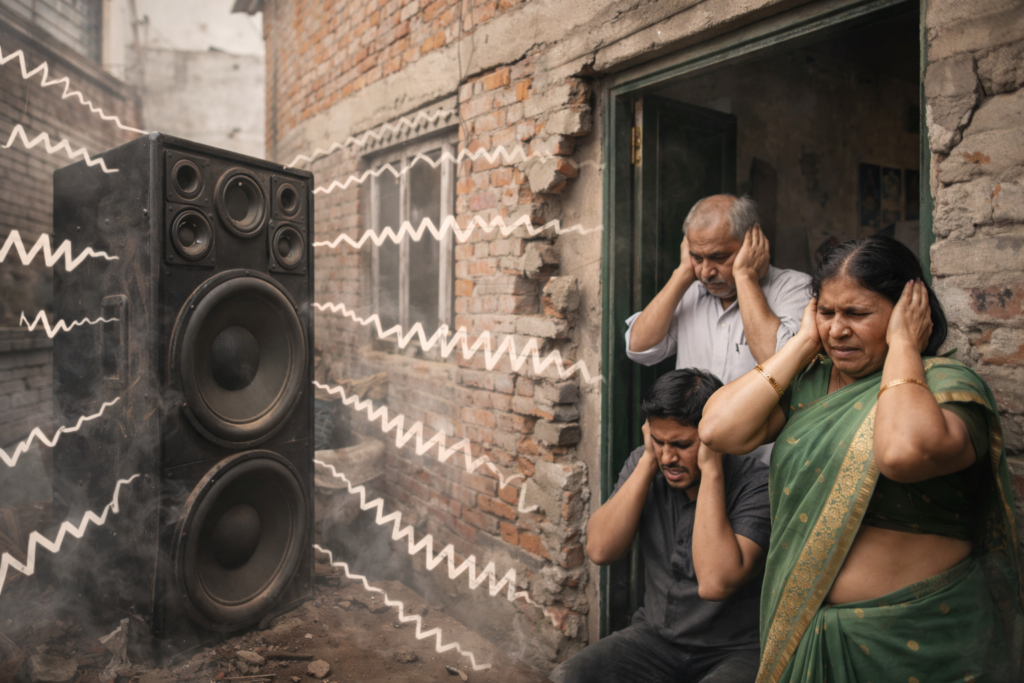
Unfortunately, many uneducated individuals in third world cultures celebrate weddings and birthdays in unlawful and irresponsible ways, ignoring community rights, legal limits, and ethical behavior. These celebrations sometimes include late-night dancing, fireworks, and music at extreme volume levels, which violates environmental laws and public peace regulations. This culture of excessive noise is not only a social disturbance but also a serious public health issue, contributing to hearing loss, sleep disorders, anxiety, and cardiovascular stress.
From a religious and ethical perspective, such behavior contradicts the true teachings of all religions, which emphasize respect for neighbors, moderation, and peaceful living. While people often claim to be highly religious, their actions during celebrations reveal a contradiction between belief and practice. Loud and uncontrolled celebrations represent a cultural imbalance that reflects weak civic sense, poor education, and lack of ethical maturity in society.
To protect urban life, governments, communities, and individuals must promote noise regulations, awareness campaigns, and responsible celebration practices. Weddings and birthdays should be moments of happiness, not months of suffering for surrounding residents. Reducing noise pollution during social events is a crucial step toward building a civilized, ethical, and healthy third world society.
Religious and Political Events Turning into Battle Grounds in Third World Societies
In many third world societies, religious and political events often turn into intense social and environmental disturbances. Numerous self-made, traditional, or cultural events are celebrated by certain groups and communities, while others oppose them due to differences in beliefs, ideology, or social values. Instead of remaining peaceful expressions of faith or political opinion, these events frequently become platforms for forced ideological exposure, creating tension among diverse populations.
Celebrators and organizers sometimes attempt to dominate public spaces by excessively promoting their beliefs through loudspeakers, rallies, banners, and mass gatherings. This forced projection of ideology often ignores the rights, comfort, and opinions of other citizens. When people are compelled to listen to religious sermons, political speeches, or ideological propaganda at high volumes, the event shifts from a cultural celebration to an unethical act of social pressure.
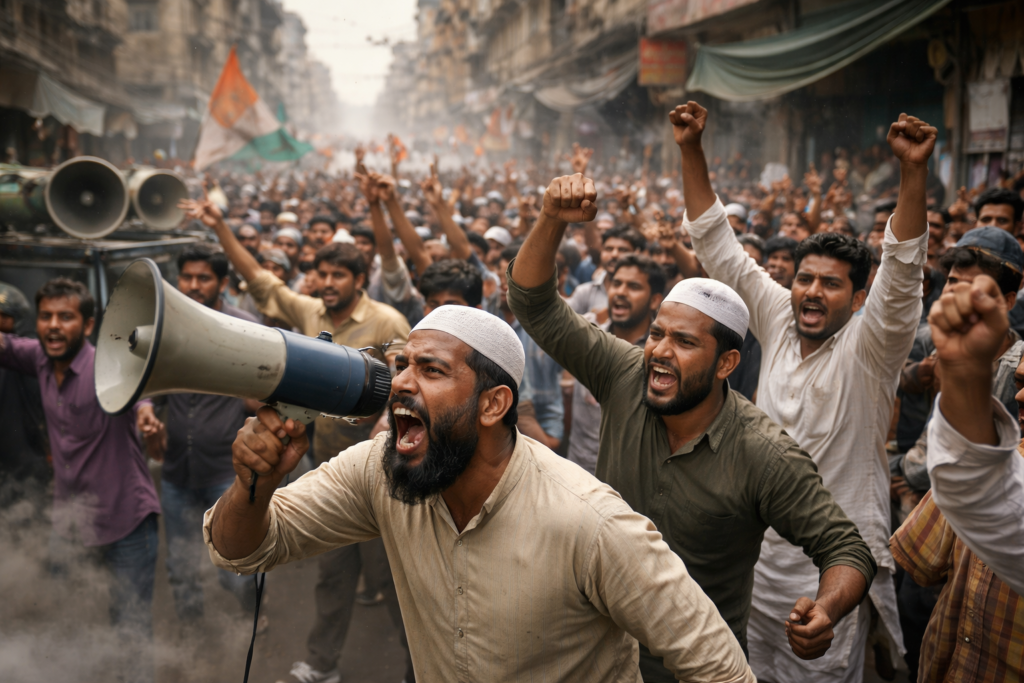
Loudspeakers and powerful sound blasters are commonly used to broadcast philosophies, slogans, and sermons for long hours, sometimes late into the night. This practice is a major source of noise pollution in urban environments. Residents living nearby—students, elderly people, patients, and working individuals—suffer from sleep disturbances, stress, anxiety, and reduced productivity. Schools and hospitals located near such gatherings experience serious disruptions, affecting education and healthcare services.
Beyond environmental and health impacts, ideological noise creates social division and hatred among people. When one group aggressively promotes its beliefs, other groups may feel threatened, marginalized, or provoked. This atmosphere of forced exposure increases intolerance and mistrust, transforming peaceful communities into divided societies. Such cultural conflicts represent a serious environmental and social disaster, particularly in densely populated third world cities where people from different backgrounds live side by side.
In extreme situations, religious and political gatherings escalate into violence and physical conflict. History has shown that ideological propaganda amplified through mass gatherings and loud public communication can trigger riots, clashes, and even large-scale violence. Sometimes these confrontations lead to injuries and loss of life, turning public celebrations into tragic battle grounds. These events highlight the dangerous consequences of uncontrolled ideological expression combined with poor governance and weak law enforcement.
From an ethical and religious perspective, forcing beliefs on others contradicts the fundamental teachings of all religions and democratic principles. True religion promotes peace, tolerance, and respect for neighbors, while true democracy encourages dialogue and peaceful disagreement. Using loudspeakers and public pressure to dominate others reflects social immaturity and a lack of civic responsibility. Such habits mirror the ethical maturity and cultural values of a nation, revealing gaps in education, awareness, and leadership.
To prevent religious and political events from becoming urban battle grounds, strict regulations on noise levels, public gatherings, and hate speech are essential. Governments, community leaders, religious institutions, and political organizations must promote peaceful communication, mutual respect, and responsible celebration practices. Public awareness campaigns, legal enforcement, and ethical leadership can help transform ideological events into platforms for unity rather than division.
Sustainable urban life depends on tolerance, education, and respect for diversity. When beliefs are expressed peacefully and responsibly, societies grow stronger. When beliefs are forced through noise and intimidation, societies collapse into chaos. Reducing ideological noise pollution is not only an environmental necessity but also a crucial step toward social harmony and human dignity in third world societies.
Sports Events in the Streets of Third World Cities: Celebration or Noise Pollution?
In many third world societies, major sports events such as the Football World Cup, Cricket World Cup, regional cricket tournaments in the subcontinent, and national leagues are celebrated with extraordinary passion. While sports bring unity, joy, and cultural identity, the way these events are celebrated in crowded urban streets often turns into a significant source of noise pollution and social disturbance.
During major matches, large screens are installed in streets, markets, and residential neighborhoods. Hundreds or even thousands of people gather to watch games together, creating an atmosphere of excitement and national pride. However, this excitement is frequently accompanied by excessive shouting, cheering, drum beating, horn blowing, fireworks, and loud music. These activities often continue late into the night, disturbing nearby residents, hospitals, students, elderly individuals, and families with young children.
In densely populated third world cities, where houses are close together and sound travels easily through concrete structures, collective cheering can reach extremely high decibel levels. Unlike stadiums designed for crowd noise, residential streets are not built to handle such acoustic pressure. As a result, people who are not interested in sports or who need rest for work, health, or education suffer from sleep deprivation, stress, and anxiety during major tournaments.
The transformation of public streets into temporary stadiums also creates environmental and social challenges. Fireworks and loud celebrations contribute to air pollution and waste generation, while uncontrolled crowds block roads and emergency routes. Hospitals and emergency services often face difficulties during such events due to blocked streets and excessive noise, which can delay critical medical responses.
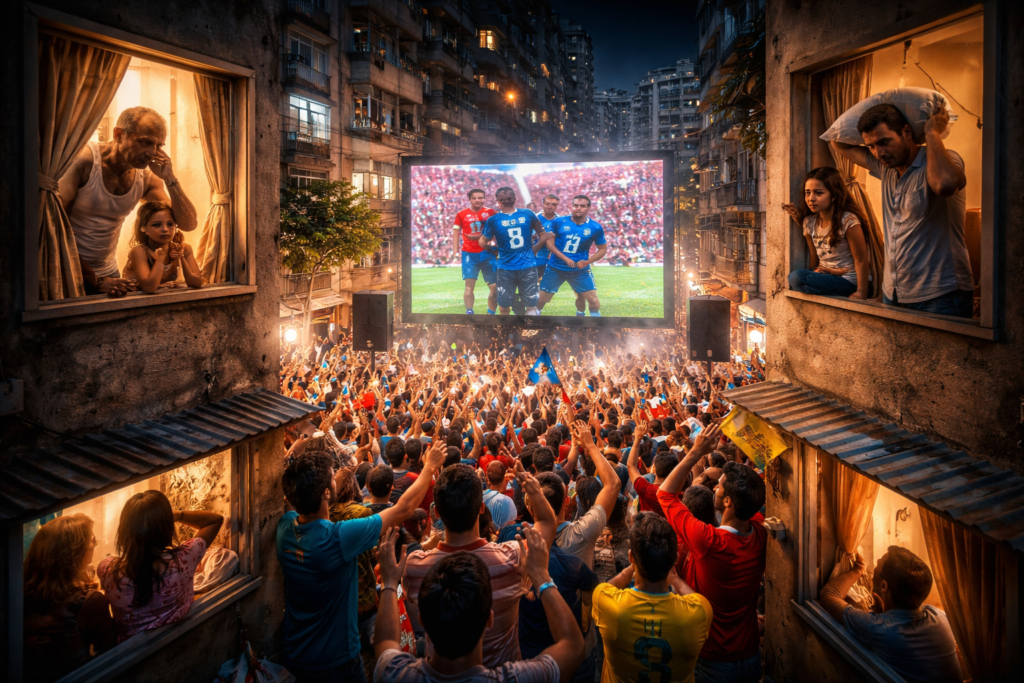
From a cultural perspective, sports celebrations reflect national identity and social unity, but excessive street celebrations highlight the lack of civic awareness and urban planning in third world societies. While developed countries celebrate sports in controlled stadiums, fan zones, and regulated public spaces, many developing societies lack structured facilities, forcing people to occupy streets and residential areas for entertainment.
Moreover, the psychological impact of sudden loud cheering, shouting, and fireworks can be harmful to children, elderly people, and individuals with mental health conditions. Studies have shown that unexpected loud noise can trigger stress responses, panic, and cardiovascular strain. For patients and elderly residents, such noise can be more than a disturbance—it can be a serious health risk.
Sports should be a source of happiness, unity, and positive energy, not a cause of environmental and social disruption. Governments and communities must promote responsible celebration practices, such as designated public viewing zones, noise level regulations, and awareness campaigns about public rights and urban ethics. Media organizations and sports authorities can also encourage peaceful and organized celebrations rather than chaotic street gatherings.
In conclusion, sports events in third world societies reveal a paradox: the same passion that unites people can also disturb urban life when not guided by civic responsibility. Celebrating sports is a beautiful cultural expression, but when celebration turns streets into uncontrolled stadiums, it becomes a form of noise pollution and an environmental challenge. Sustainable urban culture requires balancing enthusiasm with respect for community peace and public health.
🔬 Scientific Decibel-Level Comparison: Stadium vs Street Celebrations
Noise intensity is measured in decibels (dB). Normal conversation ranges around 60 dB, while prolonged exposure above 85 dB can cause hearing damage.
- Professional stadium crowd: 90–110 dB
- Fireworks explosion: 120–150 dB
- Street sports celebrations in third world cities: 95–130 dB (unregulated)
- Residential nighttime recommended limit (WHO): 40–45 dB
Unlike stadiums, residential streets have no acoustic design, sound barriers, or crowd control. Noise spreads directly into homes, schools, and hospitals, making street celebrations more harmful than stadium cheering despite smaller crowd sizes.
🌍 Case Study: Cricket and Football Celebrations in South Asia
During major cricket tournaments in the Indian subcontinent and football World Cup matches worldwide, many cities install giant screens in streets, markets, and residential areas.
For example, during cricket finals in Pakistan, India, and Bangladesh, urban neighborhoods experience continuous shouting, horn blowing, firecrackers, and music until late night. Social media and local reports have documented cases where:
- Elderly people reported heart palpitations due to fireworks noise
- Students lost sleep before exams
- Hospitals complained about blocked roads and noise interference
- Police were forced to disperse crowds due to riots and property damage
These celebrations, though joyful, often become urban environmental crises due to a lack of regulation and public awareness.
🌐 Environmental and Social Impact
Street sports celebrations contribute to:
- Noise pollution
- Air pollution from fireworks and smoke
- Traffic blockage and accidents
- Waste generation (plastic cups, banners, food waste)
- Psychological stress and sleep disorders
In developing societies, where cities are already struggling with pollution and overpopulation, such events increase the environmental burden.
🧠 Psychological and Health Effects
Sudden loud cheering and explosions trigger the fight-or-flight response in the human nervous system. Research shows that loud crowd noise can:
- Increase blood pressure and heart rate
- Cause anxiety and panic attacks
- Disturb sleep cycles and cognitive function
- Affect children’s brain development and learning performance
For pets and animals, loud sports celebrations can cause extreme fear, disorientation, and physical injury.
🌱 Conclusion: Sports, Culture, and Urban Responsibility
Sports unite nations, build identity, and create shared happiness. However, uncontrolled street celebrations reflect weak urban planning, poor civic education, and cultural neglect of community rights.
Third world cities must move celebrations to designated fan zones, stadiums, parks, and controlled public spaces. Governments should enforce noise regulations, restrict fireworks, and educate citizens about community ethics.
True sportsmanship is not only about cheering for a team—it is about respecting neighbors, protecting the environment, and celebrating responsibly. When streets become uncontrolled stadiums, celebration transforms into environmental pollution and social disturbance.
❓ FAQ Section
Q1: How do sports celebrations cause noise pollution?
Sports celebrations involve shouting, horns, fireworks, and loud music, which produce high decibel noise levels that disturb residents and exceed safe environmental limits.
Q2: What is the safe noise level for residential areas?
According to the World Health Organization (WHO), nighttime residential noise should not exceed 40–45 dB, while sports celebrations can reach over 100 dB.
Q3: Are street celebrations more harmful than stadium noise?
Yes. Stadiums are designed for crowd noise, but residential streets are not. Noise spreads directly into homes, schools, and hospitals, causing greater disturbance.
Q4: What are the health effects of excessive cheering and fireworks?
Excessive noise can cause stress, hearing damage, sleep disorders, anxiety, and cardiovascular problems, especially in elderly people and children.
Q5: How can cities reduce sports-related noise pollution?
Cities can create designated fan zones, enforce noise regulations, limit fireworks, and educate the public about responsible celebrations.
⭐ Highlight Quote
“When streets become stadiums, celebration becomes noise pollution and urban chaos.”